

For heat treatment processes, material testing, and other research procedures, precise heating devices are essential in order to obtain valid and consistent outcomes. The best examples of the most flexible and precise thermal processing units are the tube furnaces, which can be used under controlled atmosphere conditions. In various research labs, industrial manufacturing plants, and even educational institutions, tube-furnaces are widely used in developing materials through thermal processing.
Muffle Furnace recognizes the increasing needs of modern technologies for innovative heating units. This guide will introduce you to the types of tube-furnaces, their operating modes, and various applications of these units.
What is a Tube Furnace?
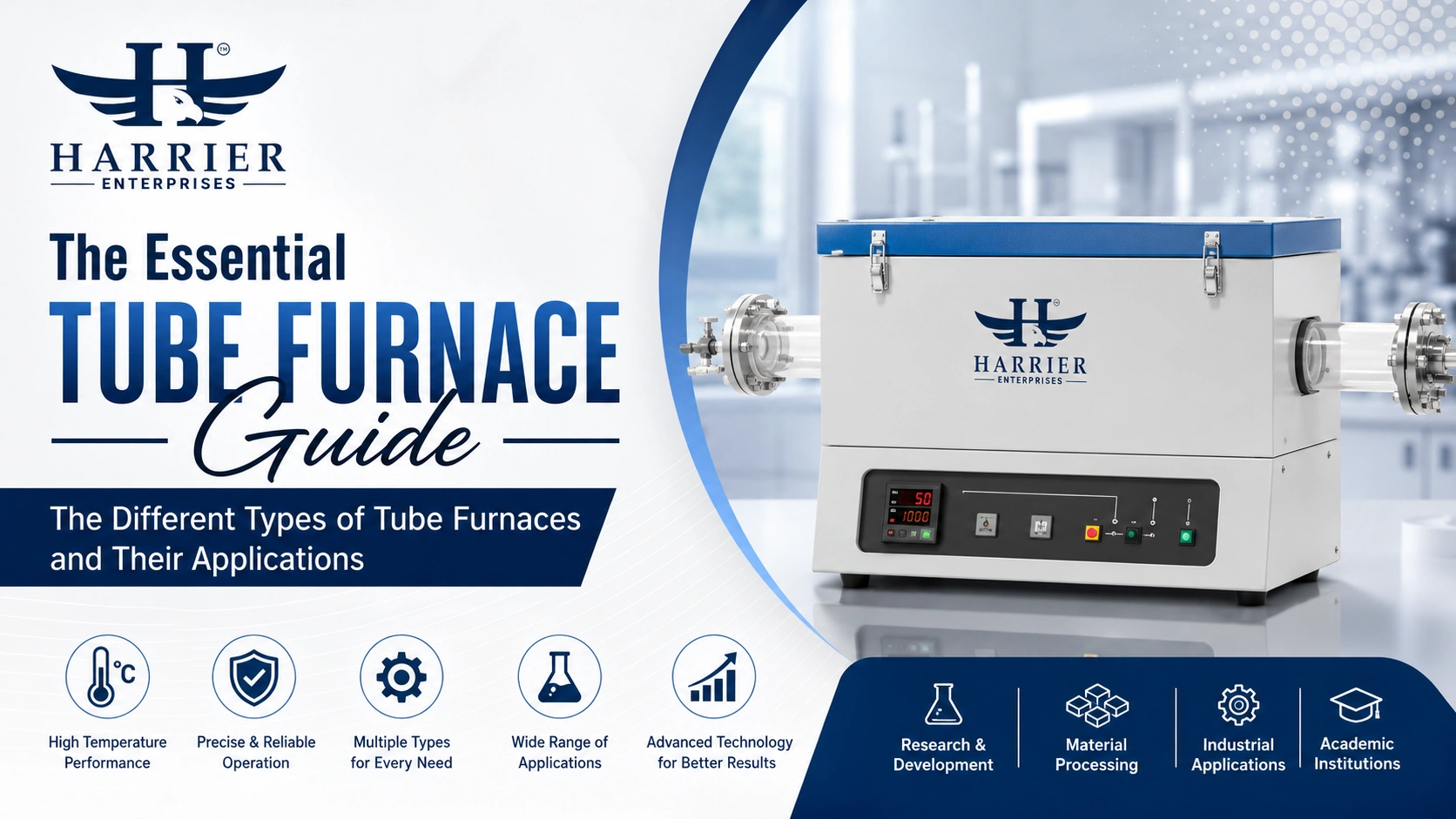
The tube furnace is a special heating device characterized by the use of a cylindrical tube or chamber in which materials are heated under well-defined temperature conditions. The main difference between the tube-furnace and other types of furnaces is that the sample in the process of heating is enclosed within the furnace tube, thus providing a way to produce a defined atmosphere, such as a vacuum, inert, hydrogen, nitrogen, or oxygen atmosphere.
Nowadays, tube furnaces find their application in calcination, sintering, annealing, heat treatments, crystal growth, catalyst preparation, and various studies on advanced materials.
How Does a Tube Furnace Work?
The principle of operation of tubular furnaces is quite simple. Heat generation takes place around the tube from the heating elements, and the generated heat is evenly distributed throughout the material present in the chamber. Temperature controllers are used to manage the process of heat generation to obtain precision temperature processing.
According to the purpose of the equipment, different gases can be supplied into the tube of the furnace. This feature makes tube-furnaces perfect for processes requiring oxidation control or contaminant-free heating.
Different Types of Tube Furnaces
1. Horizontal Tube Furnace
Horizontal tube-furnaces are among the most commonly used designs. In this configuration, the tube is positioned horizontally, allowing samples to be loaded from either end.
Applications:
- Material synthesis
- Ceramic processing
- Powder metallurgy
- Semiconductor research
- Catalyst development
These systems are popular in laboratories because they provide easy access to samples and excellent temperature uniformity.
2. Vertical Tube Furnace
A vertical tube-furnace features a vertically mounted heating chamber. This design is particularly useful when gravity-assisted processing is required.
Applications:
- Crystal growth
- Vapor deposition
- Material separation
- Specialized research projects
Vertical designs often provide improved gas flow characteristics and are preferred for certain high-purity processes.
3. Split Tube Furnace
A split tube-furnace consists of two hinged heating sections that open and close around the process tube. This configuration allows rapid tube replacement and easier sample handling.
Applications:
- Frequent sample testing
- Research laboratories
- Pilot-scale production
- Quality control environments
Split designs reduce downtime and simplify maintenance operations.
4. Multi-Zone Tube Furnace
Multi-zone systems contain multiple independently controlled heating sections. These furnaces create different temperature profiles along the length of the tube.
Applications:
- Chemical vapor deposition
- Nanomaterial synthesis
- Semiconductor manufacturing
- Advanced research studies
The ability to create temperature gradients makes these systems highly valuable for sophisticated thermal processes.
5. High Temperature Tube Furnace
A high temperature tube furnace is designed to operate at extremely elevated temperatures, often exceeding 1200°C, 1400°C, 1600°C, or even 1800°C depending on the heating element and insulation materials used.
Applications:
- Advanced ceramic manufacturing
- Refractory testing
- Metal sintering
- Aerospace materials research
- Battery material development
These furnaces deliver exceptional thermal stability and are essential for demanding industrial and scientific applications.
Understanding the Difference Between Tube Furnace and Underground Furnace
Though the tube furnace is a type of heating apparatus for precision heating processes in laboratories and industries, the name of the underground furnace refers to those heating appliances that are usually buried underground for large-scale processing and energy production activities.
The difference here comes from the precision and size of the processes that such devices can perform. The tube-furnaces are more accurate and smaller in terms of the scope of work performed, while underground furnace systems serve industrial processes on a larger scale. Tube-furnaces are used almost exclusively in labs.
Key Components of a Tube Furnace
A high-quality tube-furnace generally includes:
- Heating elements
- Ceramic or quartz furnace tube
- Digital temperature controller
- Thermal insulation
- Gas inlet and outlet ports
- Safety protection systems
- Programmable heating profiles
Each component contributes to reliable operation and consistent thermal performance.
Major Applications of Laboratory Tube Furnaces
The laboratory tube furnace has become a fundamental tool in scientific research. Its versatility enables researchers to perform a wide range of thermal experiments with remarkable precision.
Common applications include:
Material Science Research
Researchers use tube-furnaces to investigate the thermal behavior of metals, ceramics, polymers, and composite materials.
Nanotechnology
Controlled heating environments support the synthesis of nanoparticles, nanotubes, and advanced nanostructures.
Battery Research
Lithium-ion battery materials often require precise thermal treatment during development and testing.
Chemical Processing
Catalyst activation, calcination, and reaction studies frequently depend on laboratory tube-furnaces.
Academic Institutions
Universities and research centers use tube-furnaces for educational demonstrations and advanced research projects.
Advantages of Tube Furnaces
The popularity of tube-furnaces is driven by several important benefits:
Precise Temperature Control
Modern controllers maintain highly accurate temperatures throughout the heating cycle.
Controlled Atmosphere Capability
Users can introduce inert, reducing, or oxidizing gases to create ideal processing conditions.
Excellent Temperature Uniformity
Uniform heating improves experimental accuracy and product consistency.
Versatility
A single system can support numerous applications across different industries.
High Temperature Performance
Advanced models can achieve extremely high temperatures while maintaining stability.
Reduced Contamination
The sealed tube design protects materials from external contaminants.
Industries That Use Tube Furnaces
Tube-furnaces are widely used in:
- Research laboratories
- Universities
- Aerospace industries
- Metallurgical facilities
- Chemical processing plants
- Semiconductor manufacturing
- Battery production
- Ceramic industries
- Pharmaceutical research centers
- Renewable energy sectors
Their adaptability makes them one of the most valuable thermal processing tools available today.
Choosing the Right Tube Furnace
Selecting the ideal furnace depends on several factors:
- Required operating temperature
- Sample size and volume
- Atmosphere requirements
- Heating zone length
- Temperature uniformity needs
- Future research objectives
- Budget considerations
Organizations should carefully evaluate these requirements before investing in a new system.
Conclusion
The tube furnace has now become a necessary device in any research and industrial environment requiring thermal processing technology. Regardless of whether your needs pertain to laboratory testing processes, production methods, or any other application, tube furnaces are versatile instruments that will serve the purpose of efficient heat treatment processes. Regardless of whether you choose a laboratory tube furnace, a tubular furnace, or a high temperature tube furnace, having the right options will be critical in making sure you are using the right product.
Understanding the value of having the right thermal processing instrument is something our team at Muffle Furnace believes in. This is why we strive to educate our customers about different types of tube furnaces.