

Over the past decade, there has been significant growth in the field of scientific research and material development. There is an increased need for lab equipment that can perform high-pressure reactions and high-temperature reactions. The most important instrument in material science, nanotechnology, chemistry, geology, and pharmaceutical research is the hydrothermal autoclave reactor. With its help, scientists can produce advanced materials in controlled conditions which otherwise are not possible with regular lab equipment.
If you are working on crystal growth, nanoparticle production, catalyst production, or chemical reaction studies, then selecting the right autoclave reactor is very important in order to get accurate results. Hydrothermal reactors of today have amazing pressure resistance, corrosion resistance, temperature control, and safety features which are necessary for any laboratory, university, research, and industrial research centers worldwide.
What is a Hydrothermal Autoclave Reactor?
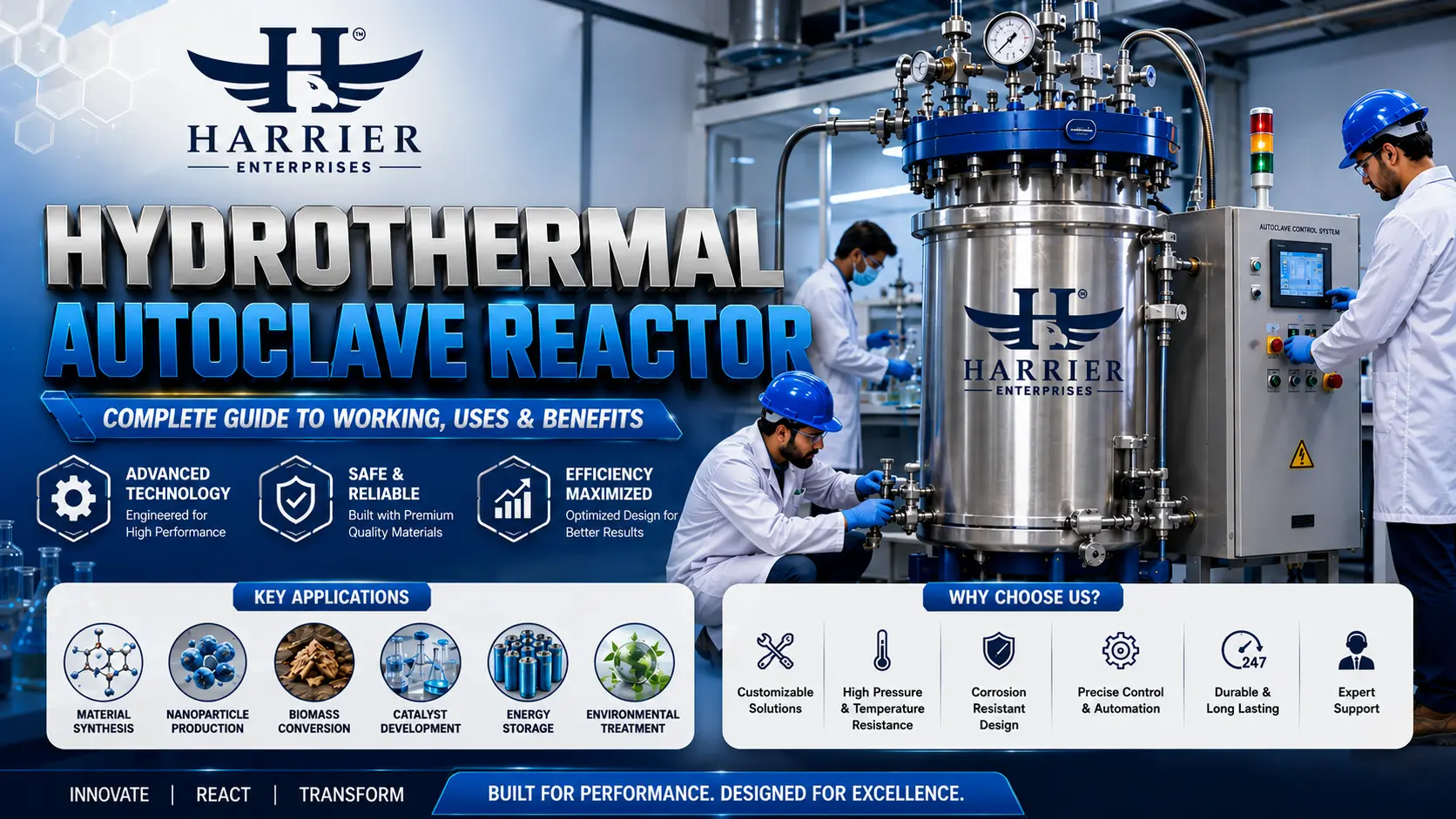
The hydrothermal autoclave reactor is a type of laboratory equipment designed for conducting reactions in aqueous solutions at elevated pressure and temperature conditions. The vessel is usually made from stainless steel, which contains an internal PTFE (Teflon) reactor to keep the reaction mixture away from contamination and corrosion.
In contrast to ordinary reactors, the hydrothermal autoclave can ensure that the water will remain liquid inside the reactor despite the fact that the temperature exceeds the boiling point of water. This ability allows scientists to create advanced materials that demonstrate excellent purity, crystalline structure, and desirable physical properties.
The typical autoclave hydrothermal equipment is widely used for synthesizing nanoparticles, zeolites, metal oxides, catalysts, ceramics, graphene derivatives, battery materials, and many other types of advanced materials.
Why is a Hydrothermal Reactor Important?
Modern research requires highly controlled experimental conditions that cannot be achieved using ordinary laboratory glassware. A hydrothermal reactor provides researchers with the ability to conduct reactions safely under extreme temperatures and pressures while maintaining exceptional accuracy.
Some of the primary reasons why these reactors are essential include:
High Pressure Capability
The sealed design allows experiments to be conducted under pressures generated during hydrothermal reactions without leakage.
High Temperature Stability
The reactor can operate safely at elevated temperatures required for crystal formation and advanced material synthesis.
Superior Material Purity
The PTFE liner prevents contamination, resulting in high-purity reaction products.
Controlled Crystal Growth
Hydrothermal synthesis promotes uniform crystal formation, making it ideal for research involving advanced functional materials.
Excellent Repeatability
Researchers can reproduce identical experimental conditions, improving the reliability of scientific studies.
Working Principle of a Hydrothermal Autoclave Reactor
The working process of a hydrothermal autoclave reactor is based on hydrothermal synthesis, where chemical reactions occur inside a sealed pressure vessel containing water or another suitable solvent.
Step 1: Sample Preparation
Researchers prepare precursor chemicals according to the desired experimental formulation.
Step 2: Filling the PTFE Chamber
The prepared solution is carefully transferred into the PTFE-lined container while ensuring the recommended filling capacity is not exceeded.
Step 3: Reactor Assembly
The PTFE liner is placed inside the stainless steel vessel, and the reactor lid is securely tightened to create a leak-proof seal.
Step 4: Heating Process
The assembled reactor is placed inside a laboratory furnace or oven where the temperature gradually increases to the required experimental value.
Step 5: Hydrothermal Reaction
As the temperature rises, internal pressure increases naturally, allowing the chemical reaction to proceed under controlled hydrothermal conditions.
Step 6: Cooling
After completing the reaction cycle, the reactor is allowed to cool naturally before opening.
Step 7: Product Collection
The synthesized material is removed, washed, filtered, dried, and prepared for further characterization or industrial use.
Major Components of an Autoclave Reactor
Every high-quality autoclave reactor consists of precision-engineered components designed for safety and durability.
Stainless Steel Outer Body
Provides structural strength and withstands high internal pressure.
PTFE Inner Vessel
Protects samples from contamination while offering excellent chemical resistance.
Reactor Lid
Creates a secure seal to prevent leakage during operation.
Sealing Ring
Maintains pressure integrity throughout the experiment.
High-Strength Fasteners
Ensure uniform sealing and operational safety.
Pressure-Resistant Design
Supports stable performance during demanding laboratory applications.
Applications of Hydrothermal Autoclave Reactors
The versatility of a hydrothermal autoclave makes it one of the most widely used research instruments across numerous scientific disciplines.
Nanotechnology
Production of nanoparticles, nanotubes, quantum dots, and graphene-based materials.
Material Science
Development of ceramics, advanced composites, superconductors, and functional materials.
Chemical Research
Synthesis of catalysts, inorganic compounds, and specialty chemicals.
Pharmaceutical Research
Preparation of novel drug delivery materials and biomedical compounds.
Energy Storage
Manufacturing battery materials for lithium-ion and sodium-ion batteries.
Environmental Science
Preparation of photocatalysts for wastewater treatment and pollution control.
Geological Studies
Simulation of natural mineral formation under controlled laboratory conditions.
Academic Research
Used extensively by universities and research institutions for advanced scientific investigations.
Benefits of Using a Hydrothermal Autoclave Reactor
Selecting a premium hydrothermal reactor offers several operational and research advantages.
High Reaction Efficiency
Hydrothermal synthesis accelerates crystal growth and material formation.
Better Product Quality
Produces highly crystalline and uniform materials.
Improved Safety
The sealed construction minimizes exposure to hazardous chemicals.
Corrosion Resistance
PTFE liners resist aggressive chemicals and extend equipment life.
Long Service Life
High-quality stainless steel construction ensures years of reliable operation.
Easy Cleaning
The removable PTFE vessel simplifies maintenance and cleaning.
Accurate Experimental Results
Stable temperature and pressure conditions improve research accuracy.
Wide Material Compatibility
Suitable for acids, alkalis, salts, solvents, and numerous chemical compounds.
How to Choose the Right Hydrothermal Autoclave
Choosing the appropriate autoclave hydrothermal model depends on research objectives and laboratory requirements.
Capacity
Select reactor volume according to sample quantity.
Temperature Range
Ensure compatibility with your experimental requirements.
Pressure Rating
Higher pressure capability expands research possibilities.
PTFE Quality
Premium PTFE liners improve durability and chemical resistance.
Stainless Steel Grade
Corrosion-resistant stainless steel provides longer service life.
Safety Features
Choose reactors with reliable sealing mechanisms and precision manufacturing.
Manufacturer Reputation
Purchase equipment from trusted manufacturers known for quality and technical support.
Maintenance Tips for Long-Term Performance
Proper maintenance significantly increases the operational life of every hydrothermal autoclave reactor.
Clean After Every Experiment
Remove all residues from the PTFE chamber after each use.
Inspect Sealing Components
Check sealing rings and threaded connections regularly.
Avoid Overfilling
Never exceed the recommended filling capacity.
Use Compatible Chemicals
Always verify chemical compatibility with PTFE liners.
Store Properly
Keep the reactor dry and protected from corrosive environments.
Regular Inspection
Examine the reactor body for wear, scratches, or mechanical damage before operation.
Why Choose Muffle Furnace?
It is very important to find a good equipment provider to get precise experimental results and guarantee safety in the laboratory. Muffle Furnace supplies top-quality hydrothermal autoclave reactors tailored specifically for use in research laboratories, universities, R&D facilities, pharmaceutical firms, and material science organizations.
All the reactors produced by Muffle Furnace are made of high-quality stainless steel and precision-designed PTFE liners to provide superior durability, high pressure, and high-quality performance. No matter what kind of experiments you do, be it nanotechnology, catalyst production, advanced ceramics, battery materials, or crystal synthesis, you can be sure that Muffle Furnace will offer you reliable hydrothermal reactor solutions according to the laboratory standards.
Conclusion
In this era, the hydrothermal autoclave reactor is among the most critical tools used in laboratory research and material fabrication. The hydrothermal autoclave reactor’s capability to conduct chemical reactions in extreme temperatures and pressure has made it possible for scientists to produce high-purity materials with high structural quality in a manner not possible using ordinary synthesis methods.
Whatever your field of study – be it nanotechnology, pharmacology, chemistry, environmental studies or materials engineering – purchasing a well-designed hydrothermal autoclave reactor will definitely make your work more efficient and accurate. With Muffle Furnace, as your chosen manufacturer of hydrothermal autoclave, you will be guaranteed a high level of engineering, reliability, durability, and performance in your laboratory research.