


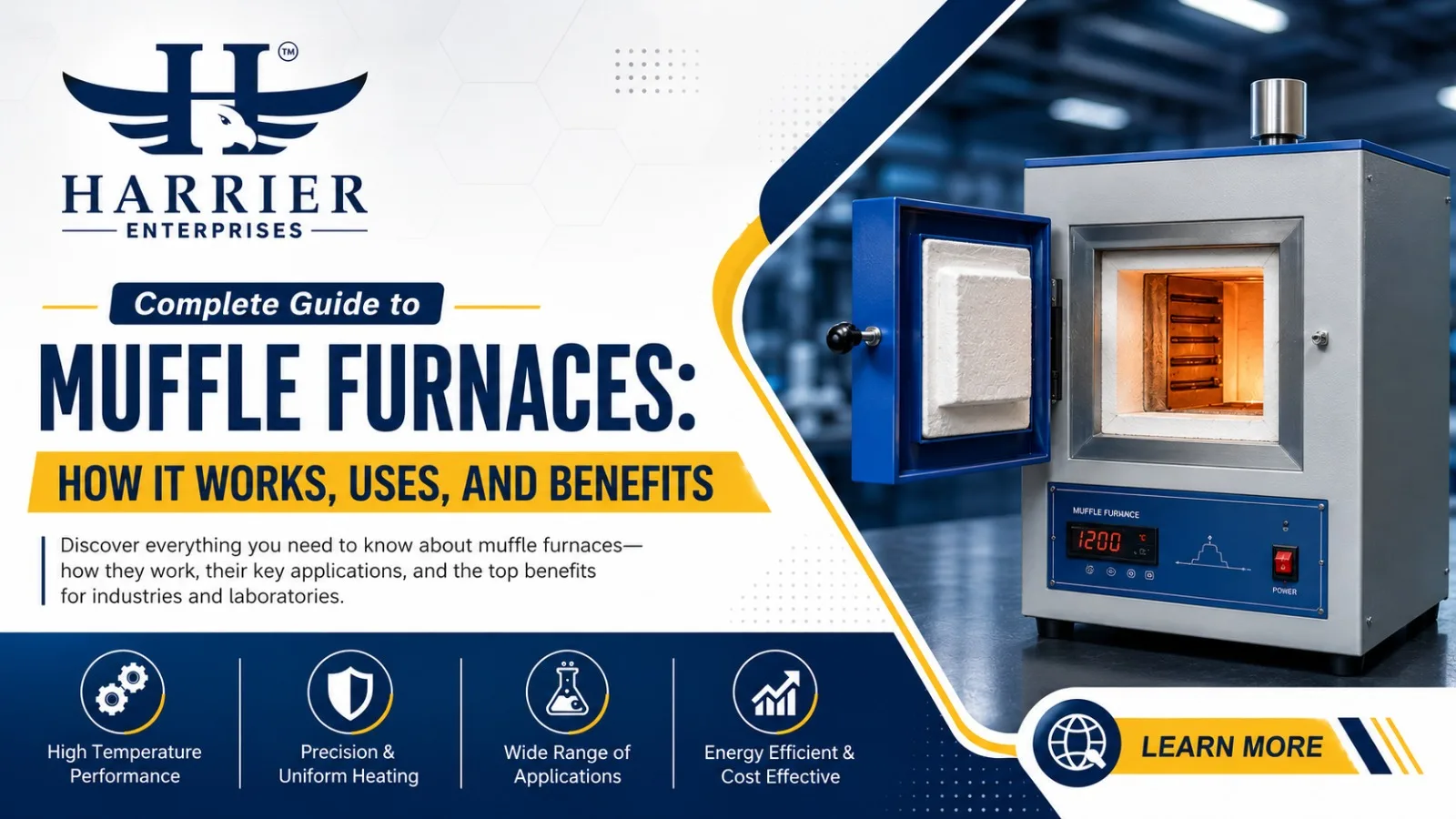
For laboratory experiments, scientific investigations, educational purposes, and manufacturing processes in industries, precise heating machines are extremely important in order to carry out accurate tests. One of the common heating equipment used when there is a need to heat at very high temperatures is the muffle furnace. As a machine designed to give uniform heating, a muffle furnace comes in handy for purposes like ash determination, hardening, testing, ceramics, and analysis.
At Muffle Furnace, we acknowledge the role that accurate thermal process equipment plays in helping attain accurate results for different experiments carried out both in laboratories and industries. Whether you are an investigator, laboratory attendant, engineer, or manufacturing person, it is necessary to have adequate knowledge regarding the working of a muffle furnace.
Here, we discuss all you need to know about the muffle furnaces.
What is a Muffle Furnace?
The muffle furnace is a special type of furnace characterized by the ability to subject samples or materials to high temperatures in an insulated chamber while protecting them from contact with any kind of gases or flames produced during the heating process.
In a muffle furnace, the term “muffle” describes the insulated chamber within which the samples are subjected to high temperatures without being affected by anything else.
The muffle furnace differs from traditional heaters in that the latter does not provide such a controlled and clean environment as required by some processes.
Modern muffle furnaces have sophisticated heating controls, programmable features, and highly effective insulating materials.
Understanding the Muffle Furnace Working Principle
The muffle furnace working principle is based on indirect heating. Instead of exposing the sample directly to a flame or combustion source, electrical heating elements generate heat around the insulated chamber.
The generated heat is evenly distributed within the chamber, creating a controlled environment where samples can be heated to specific temperatures without contamination.
Step-by-Step Working Process
- The sample is placed inside a ceramic or refractory chamber.
- The furnace door is securely closed.
- The user sets the desired temperature using the control panel.
- Electrical current passes through resistance heating elements.
- The heating elements convert electrical energy into thermal energy.
- Heat radiates uniformly throughout the chamber.
- The sample reaches the required temperature for testing or processing.
- After completion, the furnace gradually cools before sample removal.
This controlled process ensures accurate and repeatable results for laboratory and industrial applications.
Muffle Furnace Principle Explained
The working of the muffle furnace principle involves the transformation of electrical energy into heat energy via resistance heating. The resistance heating element is usually constructed using special types of alloys that have the ability to withstand very high temperatures.
The inside of the heating chamber is insulated using special materials that are resistant to heat and reduce heat losses.
The main aim of the muffle furnace principle is to provide an atmosphere free from contaminants, whereby materials are heated without coming into contact with products of combustion.
This working principle makes muffle furnaces suitable for various tests and analyses.
Principle of Muffle Furnace in Laboratory Applications
The concept behind the principle of muffle furnaces is particularly significant in laboratory setups where there is a need for the purity of the sample and precision in analysis.
In cases of analysis like determination of ash content, the heating of the sample needs to be done at controlled temperatures till the time all the organic matter has been completely oxidized. The sealed chamber makes sure that there are no extraneous elements to interfere with the process.
In the study of materials science, muffle furnaces create heating environments required for studying the thermal and chemical behavior of materials.
The capability to maintain a constant temperature is one of the principal reasons why muffle furnaces find their place in scientific laboratories.
Working Principle of Muffle Furnace: Key Components
To fully understand the working principle of muffle furnace, it is important to know its major components.
1. Heating Elements
Heating elements generate thermal energy through electrical resistance. Common materials include Kanthal and Silicon Carbide.
2. Insulated Chamber
The chamber is lined with refractory insulation to retain heat and improve energy efficiency.
3. Temperature Controller
Digital controllers regulate and maintain precise temperatures throughout the heating cycle.
4. Thermocouple
Thermocouples continuously monitor chamber temperature and provide feedback to the control system.
5. Outer Body
The external structure protects users from high temperatures and ensures safe operation.
6. Door Mechanism
A secure door helps maintain temperature stability and prevents heat loss.
Together, these components enable the efficient and reliable operation of a muffle furnace.
Muffle Furnace Working in Different Industries
The concept of muffle furnace working extends beyond laboratories and is widely utilized across various industries.
Pharmaceutical Industry
Used for testing raw materials, determining ash content, and quality control procedures.
Metallurgical Industry
Supports heat treatment, annealing, hardening, and material testing processes.
Ceramic Industry
Essential for firing ceramics, pottery, and advanced ceramic materials.
Research Institutions
Used for thermal analysis, material characterization, and scientific experimentation.
Food Industry
Helps determine mineral and ash content in food samples.
Environmental Laboratories
Supports soil analysis, waste testing, and environmental monitoring.
Common Uses of Muffle Furnaces
Muffle furnaces are highly versatile and support a wide range of applications.
Ash Content Determination
One of the most common uses in analytical laboratories.
Heat Treatment
Used for annealing, tempering, and hardening metals.
Material Testing
Assists in evaluating thermal stability and material properties.
Glass Processing
Supports controlled heating and treatment of glass materials.
Ceramic Sintering
Facilitates the production of high-strength ceramic products.
Research and Development
Used in advanced scientific studies involving thermal processing.
Benefits of Using a Muffle-Furnace
Excellent Temperature Accuracy
Modern muffle-furnaces maintain highly precise temperatures for reliable results.
Uniform Heat Distribution
Even heating ensures consistent processing across all samples.
Contamination-Free Environment
The isolated chamber prevents interaction with combustion gases and impurities.
High-Temperature Capability
Many models can operate at temperatures exceeding 1200°C.
Improved Safety
Advanced insulation and temperature control systems reduce operational risks.
Energy Efficiency
Modern designs minimize heat loss and lower energy consumption.
Versatility
Suitable for laboratories, research centers, educational institutions, and industrial facilities.
Factors to Consider When Choosing a Muffle Furnace
Selecting the right furnace depends on your specific application requirements.
Temperature Range
Choose a furnace capable of achieving your required operating temperature.
Chamber Size
Consider sample volume and available laboratory space.
Temperature Uniformity
Look for models with excellent heat distribution.
Programmable Controls
Advanced controllers improve process automation and repeatability.
Safety Features
Ensure the furnace includes over-temperature protection and thermal insulation.
Energy Efficiency
Efficient insulation helps reduce operating costs.
Maintenance Tips for Long-Term Performance
Proper maintenance extends furnace lifespan and ensures reliable operation.
- Clean the chamber regularly.
- Avoid overloading samples.
- Inspect heating elements periodically.
- Calibrate temperature sensors when necessary.
- Follow the manufacturer’s operating guidelines.
- Keep ventilation openings free from obstruction.
- Schedule preventive maintenance checks.
Routine maintenance helps maintain accurate performance and minimizes downtime.
Safety Precautions When Operating a Muffle Furnace
Safety should always be a priority when working with high-temperature equipment.
- Wear heat-resistant gloves.
- Use safety goggles when handling hot materials.
- Avoid opening the door at peak temperatures.
- Ensure adequate ventilation.
- Never place flammable materials inside the furnace.
- Follow standard laboratory safety procedures.
These precautions help protect both operators and equipment.
Future Trends in Muffle Furnace Technology
Technological advancements continue to improve muffle-furnace performance.
Modern systems now feature:
- Smart digital controls
- Touchscreen interfaces
- Remote monitoring capabilities
- Automated temperature programming
- Enhanced energy efficiency
- Advanced safety mechanisms
These innovations are making thermal processing more precise, reliable, and user-friendly than ever before.
Conclusion
The understanding of the muffle furnace working principle of operation is important for all those engaged in lab testing, researching, and manufacturing. It allows one to use the technology in a contamination-free way, ensuring the accuracy and reliability of the findings.
The principle of muffle-furnace operation plays a key role in making it one of the most reliable thermal processing devices used in various fields of industry. With thorough knowledge of how the muffle-furnace operates and works, a user will be able to benefit from using it effectively and efficiently.
Muffle Furnace aims to provide our readers with top-quality information and solutions related to the topic of thermal processing technologies and tools. We believe that the muffle-furnace will prove to be extremely helpful for all who use thermal processing equipment.