


A hot air oven is an essential piece of laboratory and industrial heating equipment used for sterilizing, drying, baking, and heat-treating various materials. A clear of a hot air oven diagram makes it much easier to understand its construction and operating mechanism. A well-illustrated diagram helps users identify the key internal and external components of the equipment.
We provide high-quality heating solutions designed for reliable temperature control and superior performance. In this comprehensive guide, you will learn about the labeled diagram of a hot air oven, its key components, working principles, temperature settings, and timing requirements. This information will assist laboratory personnel, industry professionals, and researchers in operating hot air ovens safely and effectively.
A detailed diagram or drawing of a hot air oven is particularly useful for students, technicians, and laboratory professionals. By examining a labeled diagram, users can easily understand how heat circulates within the chamber and how the various components work together to ensure uniform heating.
What Is a Hot Air Oven?
A hot air oven is an electrically operated heating chamber that utilizes dry heat for sterilizing, drying, heating, or processing materials. Unlike steam sterilization equipment, it employs the circulation of hot air to transfer heat to the items placed inside the chamber. These ovens are commonly used in laboratories, pharmaceutical facilities, hospitals, research centers, and industrial units.
A diagram of a hot air oven helps in easily understanding the equipment’s construction. Most ovens consist of an insulated chamber, a heating element, a temperature controller, trays, sensors, an air circulation system, and a door assembly. A well-illustrated diagram assists operators in understanding the location and function of each component.
Dry heat sterilization is particularly suitable for items that could be damaged by moisture. Glassware, metal instruments, powders, oils, and certain laboratory materials can be easily processed using controlled hot air. A labeled diagram of the hot air oven makes it easy to comprehend the entire heating process.
Modern hot air ovens feature advanced digital controllers for precise temperature and time settings. By examining the oven’s diagram, users can understand how the heating element and sensors maintain the required temperature within the chamber.
Hot Air Oven Comparison Table
| Feature | Natural Convection Hot Air Oven | Forced Air Circulation Hot Air Oven |
|---|---|---|
| Air Circulation | Natural movement of hot air | Fan-assisted air circulation |
| Heating Uniformity | Standard | More uniform |
| Heating Speed | Comparatively slower | Faster and efficient |
| Fan System | Not Required | Included |
| Temperature Distribution | May vary slightly | Better temperature distribution |
| Energy Consumption | Standard | Depends on fan and capacity |
| Temperature Control | Digital / PID Controller | Digital / PID Controller |
| Heating Elements | Electric Heating Elements | Electric Heating Elements |
| Applications | Basic drying and heating | Precise drying and heating |
| Suitable For | Laboratories and educational institutes | Laboratories and industrial applications |
| Load Capacity | Depends on chamber size | Depends on chamber size |
| Operating Temperature | Up to required model range | Up to required model range |
| Drying Performance | Good | Excellent |
| Temperature Uniformity | Moderate | High |
| Cost | Generally economical | Generally higher |
| Maintenance | Low | Moderate |
| Best For | Routine laboratory applications | Applications requiring uniform heating |
Hot Air Oven Diagram and Basic Construction
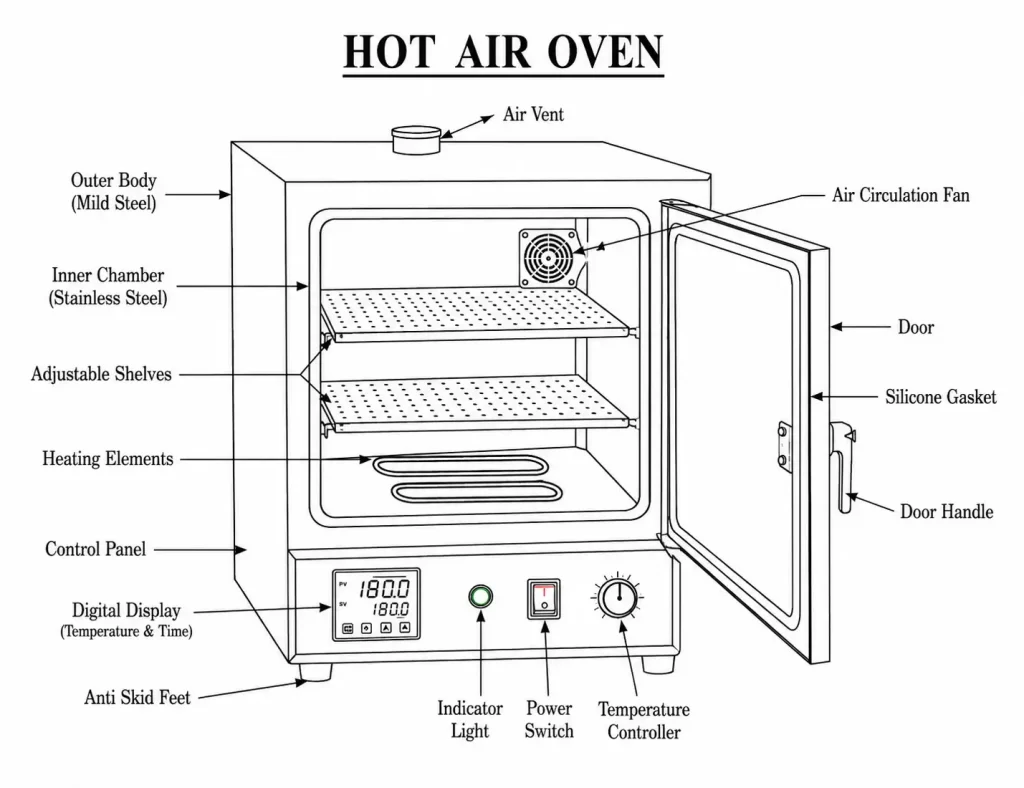
A diagram of a hot air oven typically illustrates the machine’s overall structure, encompassing both its internal and external components. The outer body protects the unit, while insulation minimizes heat loss and enhances energy efficiency. The inner chamber is generally constructed from robust, heat-resistant materials.
A detailed diagram of the oven also indicates the placement of the heating elements. These elements generate heat within or around the chamber, which then circulates throughout the interior to ensure the material placed on the trays is heated effectively.
A labeled diagram of a hot air oven is particularly useful as it clearly identifies all essential components. Users can easily locate features such as temperature sensors, controllers, shelves, the heating system, door gaskets, the ventilation system, and safety mechanisms.
A well-prepared, labeled diagram aids in installation, maintenance, troubleshooting, and training. Whether you are a student or an industrial operator, understanding the hot air oven diagram enhances your knowledge of the equipment.
Main Parts of a Hot Air Oven
The following components are commonly shown in a hot air oven diagram:
1. Outer Body
The outer body provides structural strength and protects the internal components of the oven. It is generally manufactured using strong and durable materials suitable for industrial and laboratory environments.
The outer body is also designed to improve safety by preventing direct contact with extremely hot internal components. In a standard oven diagram, the outer body forms the external structure of the complete machine.
2. Inner Chamber
The inner chamber is the main working area where materials are placed for heating, drying, or sterilization. It is designed to withstand high temperatures and provide a clean environment for the processing operation.
In a hot air oven labelled diagram, the chamber is one of the most important components. The size of the chamber depends on the capacity and application requirements of the hot air oven.
3. Heating Elements
Heating elements generate the heat required inside the oven. When electrical power is supplied, these elements convert electrical energy into heat energy.
A diagram hot air oven drawing clearly shows the position of the heating elements. Their placement is important for achieving efficient and uniform temperature distribution inside the chamber.
4. Temperature Controller
The temperature controller allows users to set and monitor the required operating temperature. Modern ovens generally use digital controllers for improved accuracy and easy operation.
In a labeled hot air oven diagram, the controller is usually located on the front control panel. It continuously monitors the temperature and helps maintain the selected heating conditions.
5. Temperature Sensor
The temperature sensor detects the actual temperature inside the chamber and sends information to the controller. This helps the system maintain accurate and stable heating conditions.
A clear hot air oven diagram helps users understand the connection between the temperature sensor, heating elements, and temperature controller.
6. Trays or Shelves
Trays and shelves are used to place the materials inside the chamber. They allow proper positioning of laboratory equipment, instruments, or industrial products during heating.
The oven diagram usually shows multiple shelves to maximize the available chamber space while maintaining proper air circulation.
7. Air Circulation System
Some hot air ovens use natural convection, while others use forced air circulation. Forced air systems generally use a fan to distribute heated air evenly throughout the chamber.
The hot air oven labelled diagram can help users understand how the airflow moves inside the chamber. Proper air circulation is essential for achieving uniform temperature.
8. Door and Door Gasket
The door provides access to the heating chamber. A properly designed gasket helps reduce heat leakage and maintains stable internal temperature.
In a diagram hot air oven drawing, the door assembly is shown as an important safety and insulation component.
9. Timer
The timer allows users to set the required heating duration. Once the selected time is completed, the system may provide an alarm or automatically stop the heating process.
A labeled hot air oven diagram often shows the timer on the control panel along with the temperature controller.
Hot Air Oven Specification Table
| Specification | Details |
|---|---|
| Product Name | Hot Air Oven |
| Type | Laboratory / Industrial Hot Air Oven |
| Working Principle | Dry Heat Sterilization and Hot Air Circulation |
| Chamber Material | Stainless Steel |
| Outer Body | Powder-Coated Mild Steel / Stainless Steel |
| Temperature Range | Ambient +5°C to 250°C / 300°C |
| Temperature Controller | Digital PID Temperature Controller |
| Temperature Display | Digital LED Display |
| Temperature Accuracy | ±1°C (Depending on Model) |
| Temperature Uniformity | Excellent Uniform Heating |
| Heating System | Electric Heating Elements |
| Air Circulation | Natural Convection / Forced Air Circulation |
| Fan System | Available in Forced Air Models |
| Timer Range | 0–999 Minutes / Programmable |
| Inner Chamber | Insulated Heating Chamber |
| Insulation | High-Density Mineral Wool / Glass Wool |
| Shelves / Trays | Adjustable Stainless Steel Shelves |
| Door Type | Insulated Door with Heat-Resistant Gasket |
| Safety Feature | Over-Temperature Protection |
| Power Supply | 220V / 230V AC, 50 Hz |
| Capacity | Available in Multiple Chamber Sizes |
| Applications | Drying, Sterilization, Heating and Testing |
| Control Panel | User-Friendly Digital Control Panel |
| Heating Method | Electric Dry Heat |
| Usage | Laboratory, Pharmaceutical and Industrial Applications |
Hot Air Oven Labelled Diagram Explained
A hot air oven labelled diagram provides a complete visual explanation of the machine and its components. Instead of simply seeing the external structure, users can understand what is located inside the equipment and how different parts are connected.
The hot air oven diagram generally includes the outer cabinet, insulated walls, heating chamber, shelves, heating elements, temperature sensor, fan, controller, timer, and door. Each part performs an important function during the heating process.
When studying an oven diagram, it is important to understand the relationship between heat generation and heat circulation. The heating elements generate heat, while the circulation system distributes it throughout the chamber. The sensor monitors the temperature, and the controller regulates the heating system.
A properly prepared labeled hot air oven diagram is useful for technical training and equipment maintenance. It also helps users identify important components before operating the machine for the first time.
How Does a Hot Air Oven Work?
The working principle of a hot air oven is based on dry heat and controlled air circulation. When the oven is switched on, electrical energy is supplied to the heating elements. These elements begin producing heat inside the chamber.
According to the hot air oven diagram, the temperature sensor continuously monitors the internal chamber temperature. The controller compares the actual temperature with the selected temperature and regulates the heating system accordingly.
The heated air circulates throughout the chamber and transfers heat to the materials placed inside. In forced convection models, a fan helps distribute the hot air more evenly. The oven diagram helps explain this movement of air inside the heating chamber.
The heating process continues until the required temperature and time settings are achieved. A diagram hot air oven drawing helps users understand how every component works together to provide controlled and reliable heating.
Hot Air Oven Temperature Explained
Temperature is a critical factor in the operation of hot air ovens. Different applications require specific temperatures depending on the material being processed. Selecting an incorrect temperature can compromise sterilization, drying quality, or product performance.
Most laboratory and industrial hot air ovens are designed to operate within a specific temperature range. Users should always adhere to the temperature requirements specified for their particular application. A labeled diagram of the hot air oven helps the operator identify the temperature control system.
For instance, different temperatures may be required for heating glassware, metal instruments, powders, and other materials. Temperatures must be selected carefully to prevent damage to delicate items.
Labeled diagrams of modern hot air ovens typically illustrate the digital temperature controller and sensor system. These components work together to maintain a stable and accurate temperature throughout the heating cycle.
Common Temperature and Time Settings
The temperature and time combination depends on the application and material being processed. Below is a general reference:
| Temperature | Approximate Time | Common Purpose |
|---|---|---|
| 60°C–100°C | Depends on material | Gentle drying |
| 100°C–140°C | 30–120 minutes | Drying applications |
| 160°C | Around 2 hours | Dry heat sterilization applications |
| 170°C | Around 1 hour | Dry heat sterilization applications |
| 180°C | Around 30 minutes | High-temperature dry heat applications |
Note: The required temperature and time may vary depending on the material, load size, oven design, and applicable laboratory procedures. Always follow the recommended operating guidelines for your specific application.
The hot air oven diagram helps users understand where temperature measurement and control take place. Accurate temperature monitoring is essential for consistent and reliable results.
Why Are Temperature and Time Important?
Temperature and time work in tandem during the heating process. Higher temperatures may require less time, whereas lower temperatures might necessitate a longer heating duration. However, increasing the temperature without considering the material’s limitations can lead to damage.
A well-designed oven diagram helps users understand how the controller, sensors, timer, and heating elements work together. These components ensure that the selected heating conditions remain as precise as possible.
Uniform heating is also essential. If the temperature inside the chamber is inconsistent, some materials may receive more heat than others. This is why air circulation plays a crucial role in many modern hot air ovens.
A labeled diagram of a hot air oven facilitates a better understanding of the entire temperature control system and helps operators use the equipment more effectively.
Types of Hot Air Ovens
Natural Convection Hot Air Oven
A natural convection oven uses the natural movement of heated air for circulation. As air becomes hot, it moves upward, while cooler air moves downward. This creates a natural circulation pattern inside the chamber.
A diagram hot air oven drawing can help explain this basic airflow system. These ovens are suitable for applications where highly controlled air movement is not required.
Forced Air Circulation Hot Air Oven
Forced air circulation ovens use a fan or blower to distribute hot air inside the chamber. This improves temperature uniformity and can provide more consistent heating results.
The labeled hot air oven diagram generally shows the location of the circulation fan and airflow path. These ovens are commonly preferred for applications requiring better temperature consistency.
Applications of Hot Air Ovens
A hot air oven is widely used in different industries and laboratories. Its applications include:
- Drying laboratory glassware
- Dry heat sterilization
- Heating metal instruments
- Drying powders and materials
- Moisture removal
- Industrial heat treatment
- Research and testing applications
- Pharmaceutical laboratories
- Educational laboratories
- Quality control departments
- Material testing
- Chemical laboratories
The hot air oven diagram helps users understand how the equipment can support different applications. Depending on the design and specifications, the same basic heating principle can be used for multiple purposes.
Advantages of Using a Hot Air Oven
Uniform Heating
A properly designed hot air oven provides controlled heating inside the chamber. Models with forced air circulation can improve temperature distribution and heating consistency.
Easy Temperature Control
Modern ovens use digital temperature controllers that allow users to select and monitor the required temperature. The oven diagram helps users identify the complete control system.
Reliable Dry Heat Process
Hot air ovens use dry heat, making them suitable for materials that should not come into contact with moisture or steam.
Wide Range of Applications
The equipment can be used for drying, sterilization, heating, testing, and industrial processing.
Simple Operation
Most modern systems are designed with user-friendly controls. A clear hot air oven labelled diagram makes operation easier, especially for new users.
Better Process Control
Temperature sensors and timers help maintain controlled operating conditions for improved process consistency.
Durable Construction
High-quality hot air ovens are manufactured using durable materials and proper insulation for long-term performance.
Energy Efficiency
Effective insulation helps reduce unnecessary heat loss and supports efficient operation.
How to Read a Hot Air Oven Diagram?
Understanding the diagram of a hot air oven is easy if you examine each component step-by-step. First, identify the outer cabinet and the inner chamber. Then, locate the heating elements that generate heat.
Next, identify the temperature sensor and controller; these components monitor and regulate the temperature. The diagram may also show the timer, fan, ventilation system, and shelves.
A labeled hot air oven diagram is very useful because each part is clearly identified. This makes it easier for students, operators, and technicians to understand the machine’s construction.
When viewing the diagram, always pay attention to the direction of airflow and the placement of the heating elements. These details provide crucial information on how the oven maintains the temperature inside the chamber.
Important Safety Tips While Using a Hot Air Oven
Always follow proper safety procedures when operating heating equipment. Before starting the machine, verify that the power connection and temperature settings are correct. Never operate faulty equipment or exceed the oven’s rated capacity.
Wear appropriate safety gear when handling hot items. Use heat-resistant gloves when opening the oven door or removing items from the chamber. A labeled diagram of the hot air oven can help users identify components that may become hot during operation.
Do not place unsuitable items inside the oven. Flammable, explosive, or heat-sensitive materials should only be processed if the equipment and operating procedures are specifically designed for them.
Regular cleaning and maintenance are also essential. A clear diagram of the hot air oven can assist technicians in understanding the equipment’s construction during inspection and maintenance.
Factors That Affect Hot Air Oven Performance
Several factors can influence the performance of a hot air oven:
Load Size
Overloading the chamber may restrict air circulation and affect heating uniformity.
Material Type
Different materials respond differently to heat. Always select the appropriate temperature and time.
Air Circulation
Proper airflow is essential for consistent heating, especially in forced convection ovens.
Temperature Accuracy
A reliable sensor and controller are necessary for maintaining accurate heating conditions.
Insulation Quality
Good insulation reduces heat loss and improves energy efficiency.
Door Sealing
A properly sealed door helps maintain stable internal temperature.
By understanding these factors and studying the hot air oven labelled diagram, operators can improve equipment performance and achieve better results.
Why Choose a Quality Hot Air Oven?
A high-quality hot air oven provides better temperature control, reliable construction, efficient insulation, and consistent heating performance. The design and quality of internal components directly affect the overall reliability of the equipment.
At Muffle Furnace, we understand the importance of dependable heating equipment for laboratory and industrial applications. Choosing the right oven depends on chamber capacity, temperature range, control accuracy, airflow system, and specific application requirements.
Before selecting an oven, carefully review its specifications and construction. A detailed diagram hot air oven drawing and labeled hot air oven diagram can help users better understand the machine’s design and functionality.
A well-designed hot air oven can improve operational efficiency, support consistent results, and provide long-term value for laboratories and industrial facilities.
Conclusion
Understanding the hot air oven diagram is essential for anyone wishing to learn about the construction, working principle, temperature control, and operational aspects of this vital heating instrument. A clear diagram makes it easy to identify components such as the chamber, heating elements, temperature controller, sensors, timer, shelves, and air circulation system.
A detailed, labeled diagram of a hot air oven is valuable for students, laboratory professionals, technicians, and industrial operators. It provides a simple visual explanation of how heat is generated and distributed within the equipment’s chamber.
Precise temperature and time settings are crucial for achieving effective drying, heating, or sterilization results. By understanding the hot air oven diagram, users can operate the equipment with greater confidence and safety.
Whether you are seeking technical knowledge or reliable heating solutions, the focus remains on providing quality equipment and useful information for laboratory and industrial heating applications. A well-understood, labeled diagram can greatly simplify operation, maintenance, and troubleshooting, helping users achieve efficient and consistent heating results.