

Sterile conditions are a must in labs, research centers, the pharmaceutical industry, hospital settings, and quality test sites. The Hot Air Oven is one of the most commonly used pieces of equipment used for the purpose of dry heat sterilization. A reliable, efficient, and accurate device capable of controlling temperatures, the Hot Air-Oven has a critical part to play when sterilizing glassware, metal tools, and heat-resistant materials.
Muffle Furnace offers superior solutions for laboratory heating and sterilization needs in order to comply with the most stringent industrial and scientific standards. A thorough knowledge of how the hot air oven works will enable labs to select appropriate equipment for their sterilization purposes.
What is a Hot Air Oven?
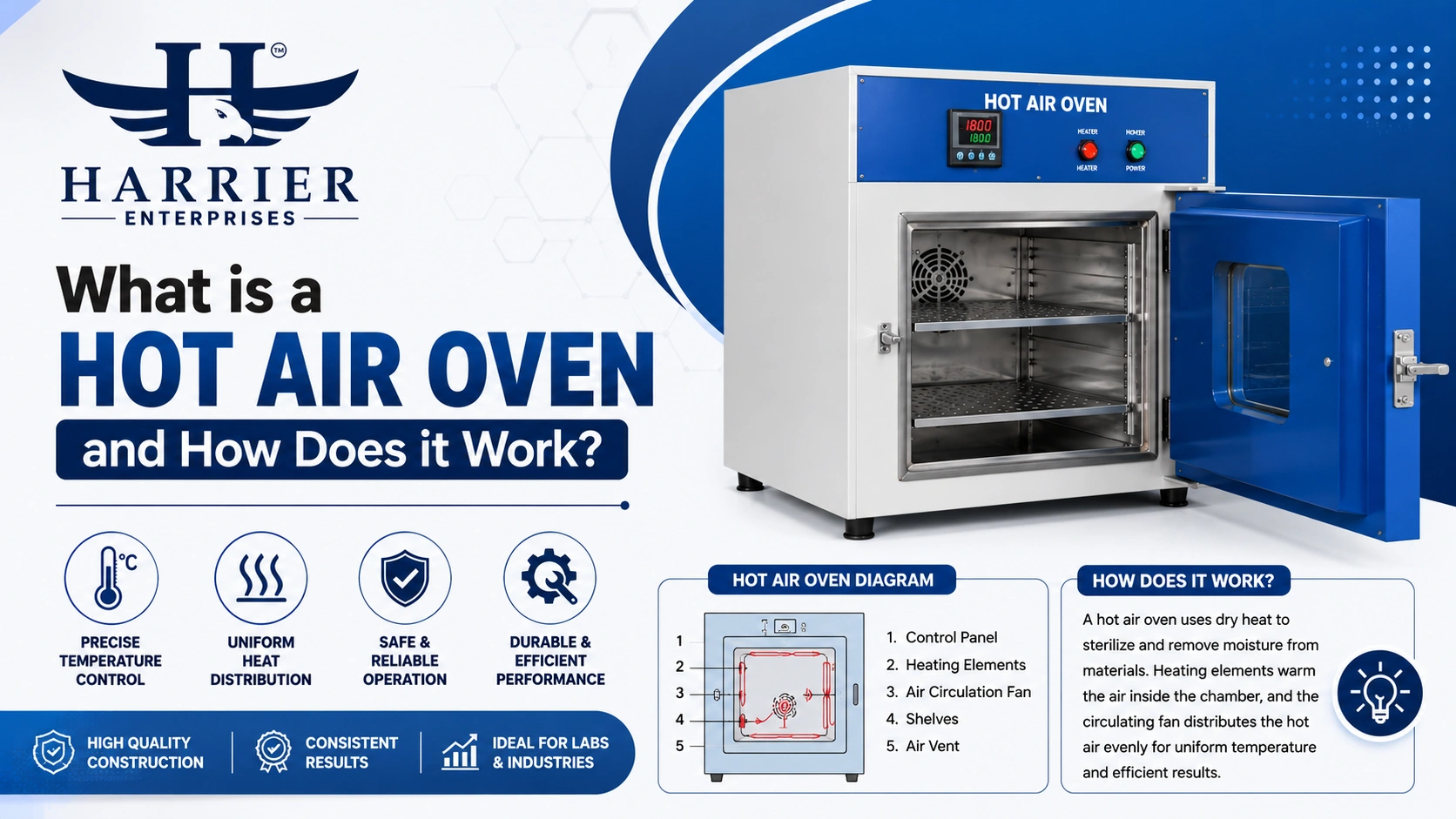
A Hot Air Oven is an instrument which makes use of dry heat for sterilization purposes. This oven is different from an autoclave in that it utilizes heated air circulation to sterilize equipment whereas an autoclave employs the use of steam.
This form of heating makes the hot air oven a suitable method for sterilization of materials that might be susceptible to damage from moisture or steam. The effectiveness of the hot air oven leads to its wide application in microbiology laboratories, the pharmaceutical industry, and even hospitals.
Hot Air Oven Principle
The hot air oven principle involves the process of transmission of dry heat energy through convection and conduction. The electrically-heated elements that constitute the hot air-oven produce hot air, which is then circulated within the oven.
In accordance with the principle of the hot air-oven, microorganisms are killed through the process of oxidation and the denaturation of proteins as a result of exposure to extreme temperatures. Heat is applied to the materials inside the hot air-oven, thus resulting in their complete sterilization without the aid of moisture.
This technique not only leads to complete sterilization but at the same time preserves heat-resistant apparatuses.
How Does a Hot Air Oven Work?
The working process of a hot air-oven is simple yet highly efficient.
Step 1: Loading the Materials
Glassware, metal instruments, laboratory equipment, and other heat-resistant materials are placed inside the oven chamber.
Step 2: Setting the Temperature
The operator selects the required sterilization temperature, typically ranging between 160°C and 250°C, depending on the application.
Step 3: Heat Generation
Electrical heating elements generate dry heat inside the chamber.
Step 4: Air Circulation
The heated air circulates uniformly throughout the chamber to ensure consistent temperature distribution.
Step 5: Sterilization Process
The materials remain exposed to the selected temperature for a specified duration to achieve complete sterilization.
Step 6: Cooling and Removal
After the cycle is completed, the oven is allowed to cool before removing the sterilized materials.
This controlled process ensures effective sterilization while minimizing the risk of contamination.
Hot Air Oven Diagram
A typical hot air oven diagram consists of several important components that work together to provide efficient heating and sterilization.
Main Components Include:
- Outer insulated body
- Stainless steel inner chamber
- Electrical heating elements
- Temperature controller
- Air circulation fan
- Thermostat and sensors
- Ventilation system
- Control panel
- Door locking mechanism
- Shelving racks
A properly designed hot air oven diagram helps users understand the airflow pattern, heat distribution, and operational mechanism of the equipment.
Hot Air Oven Sterilization Process
Hot air oven sterilization is one of the most reliable dry heat sterilization methods used in laboratories and healthcare facilities.
The process involves exposing materials to high temperatures for a predetermined period. Common sterilization conditions include:
- 160°C for 2 hours
- 170°C for 1 hour
- 180°C for 30 minutes
The hot air oven sterilization method is particularly effective for:
- Glassware
- Metal instruments
- Surgical tools
- Powders
- Oils
- Heat-resistant laboratory equipment
Because moisture is not involved, hot air oven sterilization is ideal for materials that may corrode or degrade when exposed to steam.
Applications of Hot Air Ovens
Hot air-ovens are used across numerous industries and scientific fields.
Pharmaceutical Industry
For sterilizing glass containers, metal equipment, and laboratory instruments.
Microbiology Laboratories
To sterilize petri dishes, pipettes, test tubes, and glassware.
Medical Facilities
For disinfecting surgical instruments and heat-resistant medical equipment.
Research Institutions
Used in material testing, sample preparation, and laboratory experiments.
Food Industry
For drying, testing, and heat treatment applications.
Industrial Laboratories
For product quality testing and controlled heating processes.
Hot Air Oven Picture and Design Features
A modern hot air oven picture typically shows a robust insulated cabinet equipped with digital temperature controls and stainless-steel interiors. The latest designs incorporate advanced technology to improve performance and energy efficiency.
Key design features visible in a hot air-oven picture include:
- Digital temperature display
- Stainless steel chamber
- Adjustable shelves
- Uniform airflow system
- High-quality insulation
- Safety controls
- Programmable temperature settings
- Durable construction
These features contribute to accurate sterilization and reliable laboratory operation.
Advantages of Hot Air Oven
There are numerous advantages of hot air oven systems that make them indispensable in laboratories and industrial applications.
Effective Dry Heat Sterilization
Provides reliable sterilization without the use of moisture.
Suitable for Heat-Resistant Materials
Ideal for sterilizing glass, metals, powders, and oils.
Corrosion-Free Process
Unlike steam sterilization, dry heat does not cause corrosion of metal instruments.
Uniform Temperature Distribution
Advanced airflow systems ensure consistent heating throughout the chamber.
Easy Operation
Simple controls and programmable settings enhance user convenience.
Low Maintenance Requirements
The equipment requires minimal maintenance and offers long operational life.
Cost-Effective Solution
Provides efficient sterilization with relatively low operating costs.
These advantages of hot air oven technology make it a preferred choice for laboratories worldwide.
Factors to Consider When Choosing a Hot Air Oven
Before purchasing a hot air oven, consider the following factors:
- Chamber capacity
- Maximum operating temperature
- Temperature uniformity
- Heating efficiency
- Control system type
- Safety features
- Energy consumption
- Construction material
- Compliance with laboratory standards
- After-sales service support
Selecting the right model ensures optimal performance and long-term reliability.
Maintenance Tips for Hot Air Ovens
Regular maintenance helps maximize equipment lifespan and performance.
Clean the Chamber Regularly
Remove dust and residues after use.
Inspect Heating Elements
Check for wear and ensure proper functioning.
Verify Temperature Accuracy
Calibrate sensors periodically for accurate readings.
Check Door Seals
Ensure proper sealing to prevent heat loss.
Maintain Air Circulation Systems
Inspect fans and ventilation systems regularly.
Proper maintenance ensures efficient operation and consistent sterilization results.
Conclusion
A hot air oven is an important instrument used extensively in the laboratory as well as in industries because of its ability to provide efficient sterilization through dry heat. Having knowledge regarding the principles behind the hot air-oven, its workings, and sterilization through the hot-air oven ensures that one gets contamination-free results from the hot air oven sterilization process. Regardless of whether one is looking at a hot-air oven diagram, at pictures of hot air ovens, or at the benefits of the hot air-ovens, one would be able to determine their importance in any modern lab or industry.
At Muffle Furnace, we offer you the best in heating equipment for your lab and industry. Our hot air-ovens ensure efficient sterilization through their high level of performance.