

Laboratories and advanced manufacturing companies are all focused on the concept of precision. While researchers are working on developing new materials, engineers test the performance of high-quality alloys, and scientists perform thermal analysis, any slightest difference in temperature may influence the results obtained during work. This happens because conventional heating equipment is not able to provide a precise, homogeneous, and contamination-free atmosphere needed in these particular cases. In such situations, a Tube Furnace turns into the most valuable laboratory and manufacturing equipment.
It is necessary to note that choosing an appropriate heating system is not only a question of achieving a certain temperature. The aim of proper heating equipment is obtaining consistent results, protecting valuable samples from contamination, increasing energy efficiency, and helping to achieve laboratory or industrial goals. Most laboratories purchase equipment without being well aware of its potential, but later discover that the purchased equipment does not suit the application needs. We believe that well-informed decisions will always be better investments. That is why at Muffle Furnace, our primary goal is to show how appropriate technology will solve practical problems.
Should you be considering purchasing a tube furnace, improving an existing laboratory facility, or just trying to learn more about why this type of equipment is used in laboratories across the globe, this detailed guide will help you to clear up all doubts that you might have. From the functioning principle and types of tube furnaces to their application, advantages, and purchasing advice – all of this can be found in our article.
What Is a Tube Furnace?
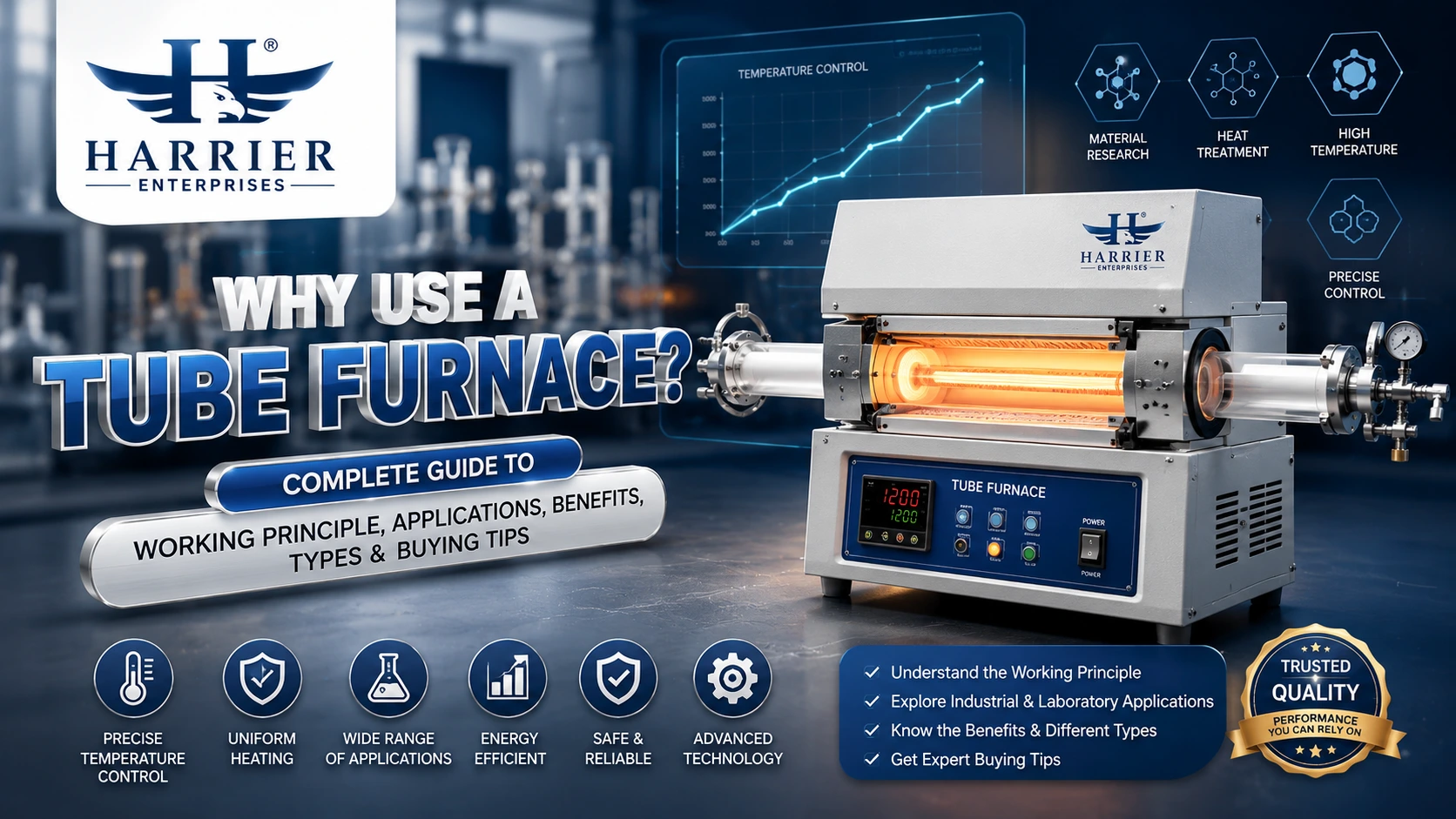
A tube furnace refers to a heating apparatus that is utilized to heat samples within a cylindrical tube in well-controlled conditions. Different from traditional box furnaces, where samples are heated within an open box-type furnace chamber, tube furnaces have special furnace tubes through which samples can be heated within a clean environment. The use of tube furnaces makes it possible to heat samples under a particular atmosphere, including air, vacuum, inert gas, hydrogen, nitrogen, and argon.
The high temperature stability and versatility of the tube furnaces make them applicable in numerous industrial and academic settings, including laboratories, universities, semiconductor fabrication, metallurgy, ceramics, nanotechnology, battery research, aerospace engineering, and drug discovery studies.
Why Is a Tube Furnace Important?
Numerous laboratory procedures go beyond simple heat generation requirements. The need for even heating and accurate temperature controls, along with the capacity to operate under certain gases and vacuum environments, is needed. In order to meet all these needs, a laboratory tube furnace is used.
Some of the main reasons why laboratories choose tube furnaces include:
- Precise temperature control
- Uniform heat distribution
- Controlled atmosphere processing
- Contamination-free heating
- Excellent repeatability
- High research accuracy
- Reliable long-term performance
- Support for advanced material development
These capabilities make the high temperature tube furnace one of the most versatile thermal processing systems available today.
How Does a Tube Furnace Work?
Understanding the working principle of a tube furnace helps researchers select the correct model for their applications.
The furnace operates using electric resistance heating elements positioned around a cylindrical heating chamber. Instead of placing samples directly inside a box chamber, materials are inserted into specially designed furnace tubes, typically made from quartz, alumina, or ceramic materials.
Sample Preparation
The material to be tested is placed inside the appropriate furnace tube. Depending on the experiment, the tube may remain open or be sealed with end caps.
Controlled Atmosphere
Many laboratory applications require oxygen-free or inert environments. Gas connections allow nitrogen, argon, hydrogen, or vacuum systems to create the desired atmosphere inside the tube.
Heat Generation
Electrical resistance elements surrounding the heating chamber generate thermal energy.
Uniform Heating
The heating zone distributes temperature evenly around the furnace tube, ensuring consistent thermal processing.
Digital Temperature Control
Modern programmable controllers regulate heating rates, holding times, and cooling cycles with excellent accuracy.
Cooling Process
After completion of the heating cycle, the furnace cools gradually while maintaining controlled conditions for sensitive materials.
This precise operating method makes the laboratory tube furnace suitable for highly demanding scientific applications.
Main Components of a Tube Furnace
Understanding the internal construction helps users appreciate why tube furnaces deliver superior performance.
Furnace Body
The external steel structure provides mechanical strength while protecting internal components.
Heating Chamber
The chamber contains high-efficiency heating elements that generate controlled temperatures.
Furnace Tubes
One of the most important components, furnace tubes hold the samples during heating. Different materials are selected depending on temperature requirements and chemical compatibility.
Common tube materials include:
- Quartz
- Alumina
- Mullite
- Ceramic
- Stainless Steel (special applications)
Heating Elements
Premium resistance heating elements ensure rapid and uniform heating throughout the chamber.
Insulation
Advanced ceramic fiber insulation minimizes heat loss and improves energy efficiency.
Temperature Controller
Digital PID controllers maintain highly accurate temperature regulation.
Thermocouple
A precision thermocouple continuously measures chamber temperature and provides feedback to the controller.
Gas Connection System
Allows laboratories to perform experiments under inert gas, vacuum, or reactive gas environments.
Types of Tube Furnaces
Different research applications require different furnace configurations.
Horizontal Tube Furnace
The most commonly used design for laboratory experiments involving heat treatment, material synthesis, and thermal analysis.
Vertical Tube Furnace
Suitable for gravity-assisted processing and specialized research applications.
Split Tube Furnace
Designed for easy sample loading and quick replacement of furnace tubes.
Rotary Tube Furnace
Ideal for continuous processing of powders and granular materials.
Vacuum Tube Furnace
Used when experiments require oxygen-free conditions.
High Temperature Tube Furnace
A high temperature tube furnace is specifically engineered for applications requiring temperatures between 1400°C and 1800°C. These systems are commonly used in advanced ceramics, semiconductor manufacturing, metallurgy, and research involving refractory materials.
Technical Specification Table
| Specification | Details |
|---|---|
| Product Name | Tube Furnace |
| Furnace Type | Horizontal / Vertical / Split |
| Maximum Temperature | 1100°C–1800°C |
| Heating Zone Length | 200–1200 mm |
| Tube Material | Quartz / Alumina / Ceramic |
| Controller | Digital PID Controller |
| Temperature Accuracy | ±1°C |
| Heating Rate | Programmable |
| Atmosphere | Air, Vacuum, Argon, Nitrogen, Hydrogen |
| Power Supply | 220V / 415V |
| Insulation | Ceramic Fiber |
| Heating Elements | Kanthal / Silicon Carbide / MoSi₂ |
| Display | Digital LED/LCD |
| Safety Features | Over-Temperature Protection, Auto Shut-Off |
| Applications | Laboratory & Industrial Research |
Major Applications of Tube Furnaces
The versatility of a tube furnace makes it one of the most widely used heating systems across scientific and industrial sectors.
Material Science
Researchers use laboratory tube furnaces to study new materials under controlled thermal conditions.
Semiconductor Industry
Tube furnaces are used for wafer processing, oxidation, diffusion, and annealing.
Battery Research
Advanced battery materials require precise thermal treatment to improve performance.
Metallurgy
Heat treatment, alloy development, and sintering processes rely on controlled heating.
Ceramic Industry
High temperature firing strengthens ceramic components and improves material properties.
Chemical Research
Controlled atmosphere heating supports catalyst preparation and thermal decomposition studies.
Nanotechnology
Precise temperature control enables the synthesis of nanomaterials with consistent properties.
Universities and Research Institutions
Educational laboratories depend on laboratory tube furnace systems for practical training, research projects, and advanced scientific experiments.
Benefits of Using a Tube Furnace
Choosing the appropriate heater is not only a matter of reaching very high temperatures but also the reliability, reproducibility, and absence of any contamination each time. A good tube furnace has many features that make it indispensable for the laboratory or industrial research centers.
Exceptional Temperature Uniformity
One of the biggest strengths of a tube furnace is its ability to maintain a consistent temperature throughout the heating zone. Uniform heat distribution reduces experimental errors and ensures every sample receives the same thermal treatment.
High Precision Temperature Control
Today’s PID controllers used in the laboratory tube furnaces enable operators to accurately program the heating rate, soaking period, and cooling process of the furnaces. This degree of accuracy is highly important in scientific tests and industrial quality control.
Controlled Atmosphere Processing
Unlike conventional furnaces, tube furnaces allow experiments to be carried out under inert gases, vacuum, or reactive gases. This controlled environment prevents unwanted oxidation and contamination while improving the quality of research results.
Suitable for High Temperature Applications
A high temperature tube furnace is capable of operating at temperatures exceeding 1700°C, making it suitable for advanced ceramic processing, metallurgy, semiconductor manufacturing, and material science research.
Clean and Contamination-Free Heating
Since samples are placed inside specially designed furnace tubes, they remain isolated from the heating elements. This clean heating process improves accuracy and protects sensitive materials from contamination.
Excellent Energy Efficiency
Modern insulation materials reduce heat loss, improve thermal efficiency, and lower operating costs compared to older furnace designs.
Long Equipment Life
Premium heating elements, ceramic insulation, and durable construction allow tube furnaces to deliver reliable performance for years when maintained correctly.
Versatile Laboratory Equipment
A single laboratory tube furnace can support hundreds of research applications, making it one of the most flexible heating systems available today.
Industries That Commonly Use Tube Furnaces
Because of their versatility, tube furnaces are used in numerous scientific and industrial sectors.
Research Laboratories
Scientists use tube furnaces for developing advanced materials, thermal analysis, and experimental research.
Universities
Educational institutions rely on laboratory tube furnaces to provide practical training and support engineering and science programs.
Pharmaceutical Industry
Used for formulation research, material testing, catalyst preparation, and quality assurance.
Metallurgical Industry
Supports heat treatment, alloy development, sintering, annealing, and material characterization.
Ceramic Manufacturing
A high temperature tube furnace is ideal for firing advanced ceramics and refractory materials.
Semiconductor Industry
Used for wafer oxidation, diffusion processes, crystal growth, and thermal processing.
Battery Manufacturing
Battery research laboratories use tube furnaces for electrode development, material synthesis, and performance testing.
Aerospace Industry
Supports testing of heat-resistant alloys, composite materials, and aerospace components.
Chemical Industry
Tube furnaces help researchers perform catalyst activation, thermal decomposition, and reaction studies.
Safety Tips While Operating a Tube Furnace
High temperature laboratory equipment should always be operated with proper safety procedures.
Wear Personal Protective Equipment
Use heat-resistant gloves, laboratory coats, eye protection, and safety footwear when handling hot materials.
Inspect Furnace Tubes Before Every Experiment
Always check furnace tubes for cracks or damage before heating, especially when working under vacuum or high pressure.
Do Not Exceed Temperature Limits
Operating above the recommended temperature may reduce the lifespan of heating elements and furnace tubes.
Ensure Proper Gas Connections
When using inert or reactive gases, verify that all gas lines and fittings are properly connected before operation.
Allow Controlled Cooling
Avoid removing samples immediately after heating. Controlled cooling prevents thermal shock and protects both the sample and the furnace tube.
Keep the Heating Chamber Clean
Regular cleaning improves heating efficiency and prevents contamination between experiments.
Maintenance Tips for Long-Term Performance
Routine maintenance is essential to maximize the performance and lifespan of a tube furnace.
Clean the Furnace Regularly
Remove residues from the chamber after every heating cycle once the equipment has cooled.
Inspect Heating Elements
Check heating elements periodically for signs of wear or damage.
Replace Damaged Furnace Tubes
If furnace tubes become cracked or contaminated, replace them immediately to ensure safe operation.
Verify Temperature Calibration
Regular calibration ensures accurate temperature control and reliable experimental results.
Check Gas Connections
Inspect valves, seals, and gas fittings for leaks before operating under controlled atmospheres.
Schedule Preventive Maintenance
Professional servicing helps identify potential issues before they affect laboratory productivity.
Buying Tips: How to Choose the Right Tube Furnace
Choosing the correct tube furnace requires evaluating your laboratory’s present and future requirements.
Maximum Operating Temperature
Select a furnace that comfortably exceeds your required operating temperature without running continuously at its maximum limit.
Heating Zone Length
The heating zone should match the size of your samples and research applications.
Tube Material
Choose quartz, alumina, ceramic, or other furnace tubes based on temperature requirements and chemical compatibility.
Atmosphere Requirements
If your experiments require inert gases or vacuum, select a model designed for controlled atmosphere processing.
Controller Features
Programmable digital controllers improve repeatability and reduce operator error.
Safety Features
Choose a furnace with over-temperature protection, automatic shut-off, and reliable thermocouple monitoring.
Future Research Needs
Invest in equipment that can support future projects rather than only current experiments.
Common Mistakes to Avoid
Many laboratories purchase equipment based only on price. Avoid these common mistakes:
- Choosing insufficient temperature capacity.
- Ignoring atmosphere requirements.
- Selecting incorrect furnace tube material.
- Skipping preventive maintenance.
- Overloading the heating chamber.
- Operating above recommended temperatures.
- Ignoring calibration schedules.
- Buying without considering future laboratory expansion.
Avoiding these issues helps maximize equipment performance and investment value.
Why Choose Muffle Furnaces?
At Muffle Furnace, we know that any laboratory or industrial setting requires accurate information before purchasing the right equipment. Our company does not operate with the aim of selling a product; rather, we aim to assist our clients in selecting the right solution for them.
We assist customers by evaluating:
- Research objectives.
- Required operating temperature.
- Sample dimensions.
- Laboratory environment.
- Atmosphere requirements.
- Safety expectations.
- Long-term operational goals.
Our commitment includes:
- Customer-first technical guidance.
- High-quality engineering solutions.
- Reliable product recommendations.
- Advanced safety standards.
- Professional after-sales support.
- Focus on long-term customer satisfaction.
Conclusion
The tube furnace is considered one of the essential thermal processing tools currently utilized in labs and industry-based research centers. The ability of the furnace to give precise temperature control, uniform heating, atmospheric processing, and a contamination-free environment makes it an indispensable instrument in material sciences, metallurgy, the pharmaceutical industry, ceramics, semiconductors, battery manufacturing, and research.
Regardless of whether your application is a lab tube furnace used in testing in labs, or high temperature tube furnace used in more complicated industrial processes, knowing all your temperature needs, sample size, atmosphere needs, and future research purposes will be crucial in choosing the appropriate model.
With careful evaluation of the specifications, maintenance requirements, and safety features, labs can buy equipment that will give accurate and reliable results throughout many years to come. At Muffle Furnace, we try to help our customers by providing practical and knowledgeable advice and information on choosing proper equipment.
Frequently Asked Questions (FAQs)
1. What is a tube furnace used for?
A tube furnace is used for high temperature heating, heat treatment, material synthesis, annealing, sintering, thermal analysis, catalyst preparation, semiconductor processing, and scientific research under controlled conditions.
2. What is the difference between a tube furnace and a box furnace?
A tube furnace heats samples inside enclosed furnace tubes, allowing controlled atmosphere processing, while a box furnace heats materials inside an open chamber and is generally used for broader heating applications.
3. What is the maximum temperature of a high temperature tube furnace?
A high temperature tube furnace typically operates between 1400°C and 1800°C, depending on the model, heating elements, and insulation materials.
4. Why are laboratory tube furnaces preferred for research?
Laboratory tube furnaces provide precise temperature control, uniform heat distribution, contamination-free heating, and the ability to perform experiments under vacuum or inert gas conditions, making them ideal for advanced research.
5. Which materials are commonly used for furnace tubes?
Common furnace tubes are manufactured from quartz, alumina, mullite, ceramic, and specialized alloys depending on the required operating temperature and chemical compatibility.
6. How often should a tube furnace be serviced?
Routine cleaning should be carried out after regular use, while temperature calibration, inspection of heating elements, gas systems, and preventive maintenance should be performed periodically according to the manufacturer’s recommendations and laboratory usage frequency.