

Science and material research usually involve a need for precise experimental conditions, allowing chemical reactions at high temperatures and pressures. In such cases, the device that plays a significant role in the study is the hydrothermal autoclaves. Such equipment helps in the production of advanced materials, nanoparticles, ceramics, and many other substances with utmost accuracy.
Muffle Furnace provides advanced laboratory equipment aimed at helping innovations in scientific studies, education, and industry development. One of the equipment types used extensively in modern material science is the hydrothermal reactor. Scientists all over the world use an autoclave reactor to conduct a hydrothermal synthesis process.
In this guide, we will discuss the work principle of a hydrothermal reactor, applications, main features, and many benefits provided by the hydrothermal synthesis method.
What is a Hydrothermal Autoclaves?
The hydrothermal autoclaves is a device that provides an environment for carrying out reactions in liquid media at high temperatures and pressure. It is widely employed in hydrothermal synthesis reactions, in which various substances are synthesized and/or transformed in a sealed system.
The phrase “hydrothermal autoclaves” refers to a type of process in which the medium for performing various processes is water. These include dissolution, transformation, crystallization, and growth of materials.
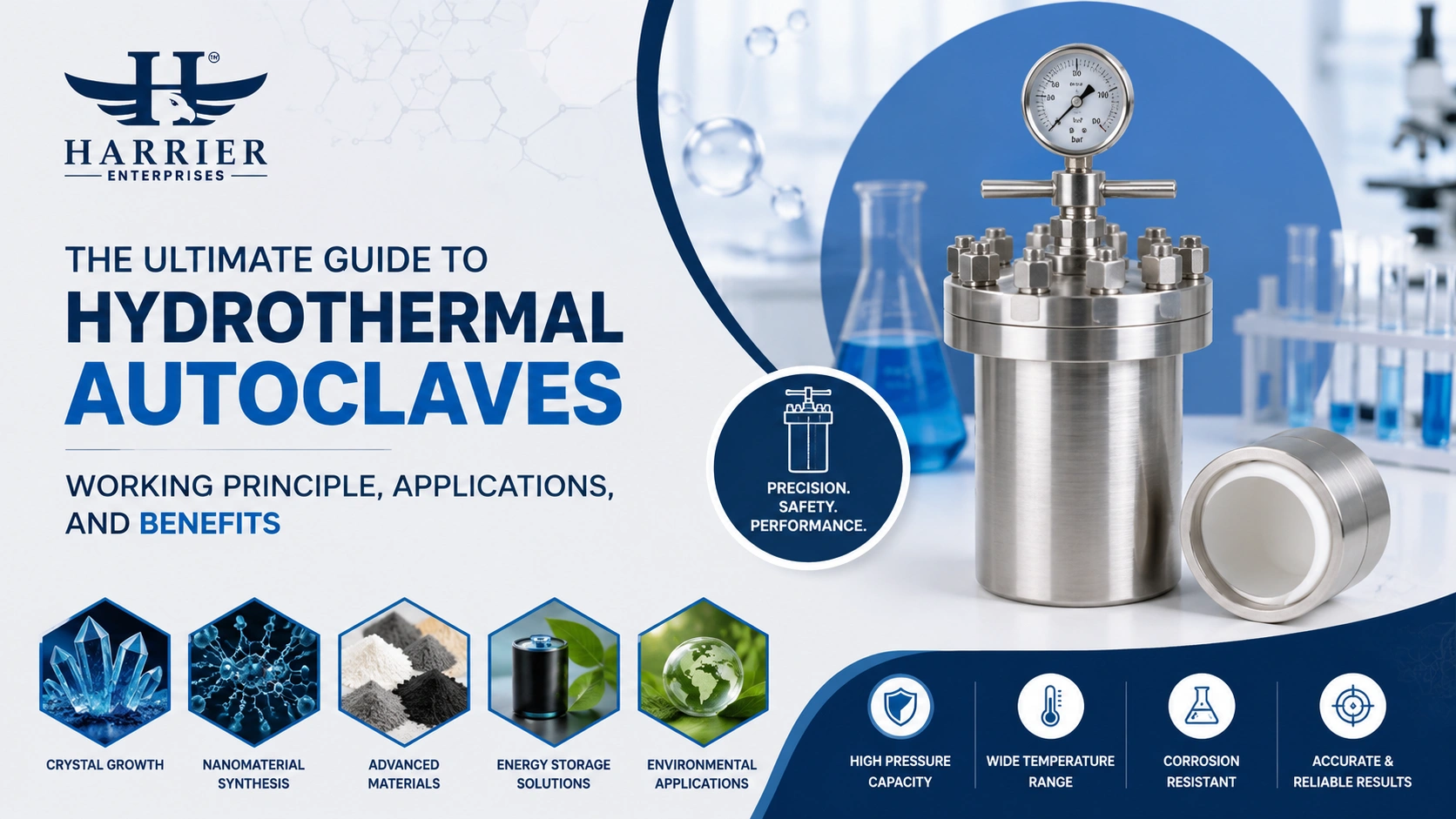
Modern autoclave reactor usually comprise a stainless steel outer housing and a special inner chamber that is usually resistant to corrosion. The latter is made from materials like polytetrafluoroethylene (PTFE) also known as Teflon.
Understanding the Hydrothermal Method
Hydrothermal synthesis can be regarded as one of the most efficient methods of production of sophisticated materials. This technique involves the carrying out of chemical reactions inside an autoclave hydrothermal reactor filled with water or aqueous solutions.
In this case, when the reactor is heated, high pressure occurs in the reactor because of evaporation of liquid. The peculiarities of this synthesis make possible the crystal formation, transformation of materials and chemical reactions that could not take place otherwise.
Autoclave hydrothermal synthesis is preferred by researchers because of its high efficiency in controlling particle size, crystal structure and purity of produced material.
Working Principle of a Hydrothermal Autoclaves
The operation of a hydrothermal reactor follows a systematic process.
Step 1: Preparation of Reactants
The required chemicals and solvents are carefully measured and mixed before being transferred into the reaction chamber of the autoclave reactor.
Step 2: Sealing the Vessel
The vessel is tightly sealed to create a controlled environment for the hydrothermal reaction.
Step 3: Heating Process
The autoclave hydrothermal system is heated to a predetermined temperature, often ranging from 100°C to 300°C or higher depending on the application.
Step 4: Pressure Generation
As the temperature increases, pressure develops inside the hydrothermal reactor, creating ideal conditions for material synthesis.
Step 5: Crystal Growth and Reaction
The high-pressure environment inside the autoclave reactor facilitates crystal formation, nanoparticle synthesis, and chemical transformations.
Step 6: Cooling and Product Recovery
After the reaction is complete, the hydrothermal system is allowed to cool before the synthesized material is collected for further analysis.
Major Components of a Hydrothermal Reactor
A quality hydrothermal reactor consists of several important components.
Stainless Steel Outer Body
Provides mechanical strength and supports high-pressure operations.
PTFE Liner
Protects the vessel from chemical corrosion during autoclave hydrothermal reactions.
Sealing Mechanism
Ensures leak-proof operation under high-temperature and high-pressure conditions.
Closure Assembly
Maintains the integrity of the autoclave reactor during synthesis.
Heating System
Provides the required thermal energy for the hydrothermal process.
Advantages of Hydrothermal Method
Researchers increasingly prefer hydrothermal synthesis because of the numerous advantages of hydrothermal method.
High Material Purity
One of the major advantages of hydrothermal method is the production of highly pure materials with minimal contamination.
Excellent Crystal Growth
The advantages of hydrothermal method include the ability to grow large, well-defined crystals with superior structural properties.
Controlled Particle Size
Another important advantages of hydrothermal method is precise control over particle size and morphology.
Lower Processing Temperatures
Compared to traditional synthesis methods, the advantages of hydrothermal method include achieving reactions at relatively lower temperatures.
Environmentally Friendly Process
Many researchers appreciate the advantages of hydrothermal method because water serves as the primary reaction medium, reducing the need for harmful solvents.
Uniform Product Formation
The advantages of hydrothermal method also include excellent uniformity in material composition and structure.
Improved Material Performance
Many advanced materials synthesized using a hydrothermal reactor exhibit enhanced physical and chemical properties.
Applications of Hydrothermal Autoclaves
The versatility of a hydrothermal autoclaves makes it suitable for numerous scientific and industrial applications.
Nanotechnology Research
A hydrothermal reactor is extensively used for synthesizing nanoparticles and nanostructured materials.
Material Science
Researchers use autoclave hydrothermal techniques to develop advanced ceramics, oxides, and functional materials.
Crystal Growth Studies
The controlled environment inside an autoclave reactor supports the growth of high-quality crystals.
Semiconductor Research
Many semiconductor materials are synthesized using hydrothermal processes.
Battery Material Development
The hydrothermal reactor plays an important role in producing electrode materials for advanced batteries.
Environmental Research
Scientists utilize autoclave hydrothermal methods for wastewater treatment studies and catalyst development.
Biomedical Applications
Various biomaterials and medical research compounds are synthesized using a hydrothermal reactor.
Academic Laboratories
Universities and research institutes rely on autoclave reactor systems for teaching and experimental work.
Why Researchers Prefer Autoclave Hydrothermal Systems
Modern laboratories prefer autoclave hydrothermal systems because they offer unmatched flexibility and reliability.
Key reasons include:
- High-pressure reaction capability
- Excellent reproducibility
- Safe operation
- High-quality material synthesis
- Reduced contamination risks
- Versatile research applications
- Long service life
The ability of an autoclave reactor to create controlled reaction environments makes it indispensable in advanced scientific studies.
Safety Considerations During Hydrothermal Synthesis
When operating a hydrothermal reactor, safety should always be a priority.
Follow Manufacturer Guidelines
Always use the autoclave reactor according to recommended operating limits.
Inspect Seals Regularly
Proper sealing is essential for safe hydrothermal processing.
Avoid Overfilling
Never exceed the recommended filling capacity of the hydrothermal reactor.
Monitor Temperature and Pressure
Continuous monitoring improves the safety of autoclave hydrothermal operations.
Use Protective Equipment
Researchers should wear appropriate safety gear while handling a hydrothermal reactor.
Maintenance Tips for Hydrothermal Autoclaves
Regular maintenance improves the performance and lifespan of a hydrothermal autoclaves.
- Clean the PTFE liner after every experiment.
- Inspect sealing components regularly.
- Remove chemical residues promptly.
- Check for corrosion or physical damage.
- Store the autoclave reactor in a dry environment.
- Follow routine inspection schedules.
Proper maintenance ensures reliable and safe hydrothermal synthesis operations.
Future of Hydrothermal Technology
Hydrothermal synthesis has a very bright future ahead. Scientists keep creating new materials that can be used for energy, electronic devices, environmental protection, and biomedicine.
With further development in the field of nanotechnology and advanced materials, the need for effective hydrothermal synthesis using autoclaves becomes more and more evident. New reactors provide a higher level of automation and better safety conditions.
Conclusion
A hydrothermal autoclaves is an important tool that is widely used in laboratories to perform chemical reactions under conditions of increased temperature and pressure. Regardless of whether you choose a hydrothermal autoclaves for the preparation of nanomaterials, for growing crystals, or developing batteries or other materials, the use of an autoclave reactor will be beneficial for you.
At Muffle Furnace, we realize the value of research tools and laboratory solutions. The increasing popularity of hydrothermal autoclaves systems shows how many advantages the hydrothermal process possesses, starting from improved crystal formation and ending with environmentally friendly production methods. Using a hydrothermal autoclaves reactor will help achieve great results in your scientific studies.