

Accuracy is of paramount importance in any laboratory, research institute, quality testing institute, or in any industry that relies on heat testing processes. Whether it is scientists who are engaged in analysis of chemical compounds, engineers who are involved in testing of high-temperature-resistant materials, or quality control managers measuring ash content, one minor mistake in heating will result in inaccurate results, failure of the end product, and financial losses. It is no surprise then that selection of appropriate heating equipment for laboratory and industrial use becomes one of the key priorities of such organizations.
Among various types of heating equipment used in laboratories, a muffle furnace stands out as the most reliable, accurate, and versatile equipment used for controlled high-temperature applications. Unlike conventional heating equipment, which directly heats samples with open flame or burning gas, a muffle furnace isolates the sample from this heating medium to ensure even heating and accurate tests. Demand for high-quality muffle furnaces in educational institutes, pharmaceutical laboratories, metallurgy factories, ceramic industries, food testing laboratories, environmental laboratories, and industrial production plants increases each year.
At Muffle Furnace, we know for certain that buying laboratory equipment must never solely be decided upon according to specifications or pricing. Each laboratory requires something different in terms of testing capabilities, temperature, and sample sizes. The correct equipment is designed to help research scientists, engineers, and other laboratory professionals produce reliable, accurate, and repeatable results safely and effectively.
The following guide has been compiled to help answer some of the most commonly asked questions by laboratory professionals. Whether you are looking for information on the muffle furnace diagram, muffle furnace working principle, how a muffle furnace principle, what is the use of a muffle furnace uses, or you just want to compare some laboratory furnaces before investing, this guide is the right one for you.
Introduction to a Muffle Furnace
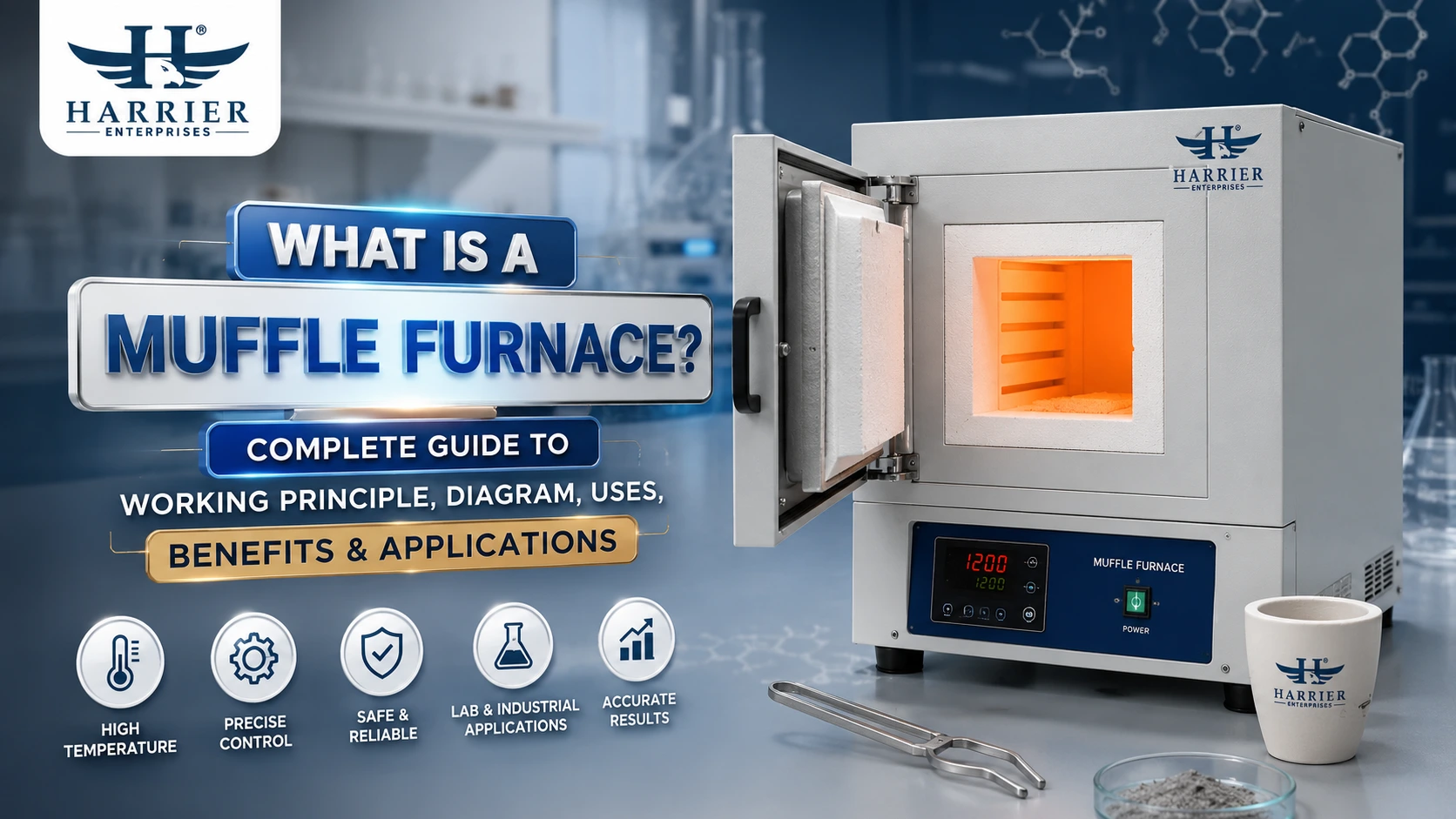
The Muffle Furnace is a laboratory as well as an industry high-temperature equipment that is used for heating up materials within a highly insulated chamber without any contact with flames, fuel gases, soot, or any other products of combustion. Rather than direct heating, the chamber is heated through electric heating elements.
This way, the samples can be heated up in such a manner that they remain free from any contamination in the process. This equipment is thus ideal for various kinds of laboratory and industrial uses, including testing and scientific research purposes.
Contemporary muffle furnaces are commonly employed due to their high level of temperature stability, accurate digital controls, and uniform heating.
What Is a Muffle Furnace?
A muffle furnace is an artificially designed electric furnace that has the capacity to produce very high temperatures inside an insulated enclosure. The heating elements are arranged inside the walls of the chamber so that even heat distribution is achieved without allowing the heating source to come into contact with the material being processed.
The term muffle furnace derives its name from the insulated chamber, previously known as a muffle, through which the test material is isolated from the combustion gases. In modern times, electric furnaces have replaced those that required fuel combustion, but the name is still used to denote such types of furnaces.
Currently, laboratories around the world use muffle furnaces for many purposes.
Why Is a Muffle Furnace Important?
Many laboratory experiments require temperatures exceeding what ordinary laboratory ovens can safely achieve. More importantly, researchers need heating environments that do not introduce impurities into sensitive samples.
A muffle furnace addresses these challenges by providing:
- Extremely high operating temperatures
- Uniform heat distribution
- Clean heating environment
- Accurate temperature control
- Reliable testing conditions
- Minimal contamination risk
- Repeatable laboratory results
- Long-term operational reliability
Because of these capabilities, muffle furnaces have become essential equipment across scientific, educational, and industrial laboratories.
Muffle Furnace Working Principle
Understanding the muffle furnace working principle is essential for anyone involved in laboratory testing or industrial heat treatment.
The furnace operates by converting electrical energy into thermal energy through specially designed resistance heating elements positioned around the insulated chamber.
Step 1: Electrical Power Supply
When the furnace is switched on, electricity flows through high-temperature resistance heating elements.
Step 2: Heat Generation
The resistance elements convert electrical energy into heat, rapidly increasing the chamber temperature.
Step 3: Heat Distribution
The insulated chamber ensures uniform temperature distribution while minimizing heat loss.
Step 4: Sample Heating
The material placed inside the chamber receives indirect, controlled heating without direct flame exposure.
Step 5: Temperature Monitoring
Digital controllers continuously monitor and regulate the chamber temperature to maintain precise heating conditions.
This controlled heating process forms the foundation of working principle of the muffle furnace, enabling accurate laboratory testing across numerous scientific disciplines.
Principle of Muffle Furnace
The principle of muffle furnace is based on indirect heating combined with thermal insulation.
Unlike open-flame heating methods, the heating elements remain outside the working chamber. Heat passes through the insulated walls into the chamber, ensuring that samples experience only clean radiant heat rather than direct flame contact.
This indirect heating process offers several advantages:
- Uniform temperature throughout the chamber
- Improved testing accuracy
- Elimination of combustion contamination
- Better thermal efficiency
- Safer laboratory operation
Because of this design, the muffle furnace principle provides highly consistent heating for sensitive laboratory applications.
Muffle Furnace Diagram and Construction
One of the most common questions from students and laboratory professionals concerns the muffle furnace diagram and the internal construction of the equipment.
Although furnace designs vary slightly between manufacturers, most laboratory models include similar components.
Outer Steel Body
Provides structural strength and protects internal components.
Ceramic Fiber Insulation
High-density insulation minimizes heat loss while improving energy efficiency.
Heating Elements
High-temperature-resistant coils generate the heat required inside the chamber.
Heating Chamber
The chamber is where laboratory samples are placed for heating.
Digital Temperature Controller
Allows precise adjustment and monitoring of operating temperatures.
Thermocouple Sensor
Continuously measures chamber temperature and provides feedback to the controller.
Insulated Door
Prevents heat escape while protecting operators from excessive temperatures.
Ventilation Opening
Allows controlled release of gases generated during certain testing procedures.
When studying a muffle furnace diagram, these are the major components typically identified in laboratory manuals and technical documentation.
Muffle Furnace Temperature Range
The muffle furnace temperature varies depending on the model, application, and laboratory requirements.
Common temperature ranges include:
| Furnace Type | Maximum Temperature |
|---|---|
| Laboratory Model | 1000°C |
| Standard Research Model | 1100°C |
| High Temperature Model | 1200°C |
| Industrial Furnace | 1400°C |
| Advanced Ceramic Furnace | 1600°C–1800°C |
Selecting the correct muffle furnace temperature depends entirely on the testing process and material characteristics.
Technical Specification Table
| Specification | Details |
|---|---|
| Product Name | Muffle Furnace |
| Heating Method | Electric Resistance Heating |
| Maximum Temperature | 1000°C–1800°C |
| Chamber Material | High-Alumina Ceramic |
| Temperature Accuracy | ±1°C |
| Controller Type | Digital PID Controller |
| Display | LED / LCD |
| Power Supply | 220V / 415V |
| Heating Elements | Kanthal / Silicon Carbide |
| Insulation | Ceramic Fiber |
| Chamber Capacity | Customized |
| Heating Time | Fast Heating |
| Safety Features | Overheat Protection, Auto Cut-Off |
| Applications | Laboratory & Industrial |
| Operation | Fully Automatic |
Uses of Muffle Furnace
The muffle furnace uses extend across hundreds of laboratory and industrial applications because of their ability to provide accurate and contamination-free heating.
Chemical Laboratories
Used for thermal analysis, sample preparation, and ash content determination.
Pharmaceutical Industry
Supports quality testing, formulation analysis, and research activities.
Metallurgical Laboratories
Performs heat treatment, alloy testing, and material property evaluation.
Ceramic Industry
Used for firing ceramic products at controlled temperatures.
Glass Manufacturing
Processes specialty glass materials under precise heating conditions.
Food Testing Laboratories
Determines ash content in food samples and supports quality assurance.
Environmental Laboratories
Analyze soil, sludge, and environmental samples.
Educational Institutions
Widely used for teaching practical laboratory techniques and research experiments.
The uses of muffle furnace in laboratory continue to expand as scientific research and quality control standards become more advanced.
Benefits of a Muffle Furnace
A high-quality muffle furnace is much more than a laboratory heating device—it is an investment in accuracy, consistency, and long-term productivity. Whether you operate a research laboratory, pharmaceutical facility, university, testing laboratory, or industrial manufacturing unit, choosing the right furnace directly affects the quality of your results.
Excellent Temperature Accuracy
One of the biggest advantages of a muffle furnace is its ability to maintain stable and precise temperatures throughout the heating cycle. Modern digital controllers continuously monitor the chamber temperature, ensuring highly reliable testing conditions.
Uniform Heat Distribution
Because heating elements surround the chamber, heat spreads evenly across the entire workspace. This uniform heating improves testing accuracy and eliminates temperature variations.
Contamination-Free Heating
Unlike gas-fired heating systems, a muffle furnace isolates samples from flames, smoke, and combustion gases. This makes it ideal for sensitive laboratory analysis.
Wide Temperature Range
Modern laboratory furnaces support a broad muffle furnace temperature range, making them suitable for ash determination, material testing, ceramic firing, heat treatment, and advanced scientific research.
Energy-Efficient Operation
Advanced insulation materials minimize heat loss, reduce power consumption, and improve overall energy efficiency.
Easy Digital Control
Modern systems feature programmable PID controllers, allowing laboratories to automate heating cycles and maintain consistent testing procedures.
Long Service Life
Premium-quality insulation, durable heating elements, and robust steel construction ensure reliable operation for years with proper maintenance.
Suitable for Multiple Industries
From educational laboratories to heavy industrial manufacturing, muffle furnaces support hundreds of testing and heating applications.
Industrial Applications of a Muffle Furnace
The popularity of the muffle furnace continues to grow because one machine can perform numerous laboratory and industrial heating processes with excellent accuracy.
Pharmaceutical Industry
Pharmaceutical laboratories use muffle-furnaces for quality control, raw material testing, formulation development, residue analysis, and research activities.
Chemical Laboratories
Used for chemical analysis, thermal decomposition, sample preparation, and analytical testing.
Metallurgical Industry
Supports heat treatment, metal testing, alloy analysis, hardness evaluation, and material development.
Ceramic Manufacturing
High-temperature firing helps improve the strength and durability of ceramic products.
Glass Industry
Used for controlled heating during specialty glass manufacturing and research.
Food Testing Laboratories
One of the most common uses of muffle-furnace in laboratory is determining ash content in food products to meet quality and regulatory standards.
Environmental Testing Laboratories
Environmental researchers analyze soil, sludge, waste materials, and industrial samples using controlled heating methods.
Universities & Research Institutions
Educational laboratories depend on muffle-furnaces for student experiments, materials science research, and engineering studies.
Safety Precautions While Using a Muffle Furnace
Although a muffle-furnace is designed with advanced safety features, following proper operating procedures is essential.
Wear Protective Equipment
Always use heat-resistant gloves, laboratory coats, and safety goggles when handling hot samples.
Avoid Overloading the Chamber
Do not exceed the recommended chamber capacity, as this can affect heating performance and equipment life.
Use Appropriate Containers
Only heat laboratory-approved crucibles and high-temperature containers.
Keep the Door Closed During Heating
Opening the chamber unnecessarily causes heat loss and temperature fluctuations.
Allow Proper Cooling
Never remove samples immediately after heating unless recommended by the testing procedure.
Maintain Proper Ventilation
Certain materials may release gases during heating, making adequate laboratory ventilation important.
Follow Manufacturer Instructions
Every furnace model has specific operating procedures and temperature limits that should always be followed.
Maintenance Tips for Long-Term Performance
Routine maintenance keeps the furnace operating efficiently while improving its lifespan.
Clean the Heating Chamber
Remove ash, residue, and debris after the chamber has cooled completely.
Inspect Heating Elements
Regular inspection helps identify worn or damaged elements before they affect performance.
Check Temperature Calibration
Periodically verify controller accuracy to ensure precise laboratory results.
Inspect Door Seals
Damaged seals increase heat loss and reduce heating efficiency.
Keep Air Vents Clean
Clean ventilation openings to maintain proper airflow.
Schedule Professional Servicing
Annual preventive maintenance helps identify hidden issues before they become expensive repairs.
How to Choose the Right Muffle-Furnace
Selecting the correct furnace depends on your laboratory’s testing requirements rather than simply choosing the highest temperature model.
Required Temperature Range
Choose a furnace that comfortably meets your maximum testing temperature.
Chamber Size
Select a chamber capacity suitable for your sample volume and future workload.
Temperature Controller
Digital PID controllers provide greater accuracy and repeatability than basic controllers.
Heating Speed
Fast heating improves productivity without compromising temperature stability.
Insulation Quality
High-quality ceramic fiber insulation reduces energy consumption.
Safety Features
Look for over-temperature protection, automatic shut-off, and reliable temperature sensors.
Application Type
Different industries require different furnace specifications. Always choose a model designed for your laboratory applications.
Why Choose Muffle Furnace?
At Muffle Furnace, we know that laboratories buy instruments to have reliable, consistent, and accurate results—more than just buying another instrument. Any research work, quality assurance tests, and even industrial testing procedures need an instrument that works consistently.
Here at Muffle Furnace, we aim to help laboratories buy the right solutions that will fit their own testing needs by taking into consideration several things, including temperature, size of chamber, type of sample, heating accuracy, and many more.
Our commitment includes:
- High-quality laboratory equipment
- Accurate temperature control
- Reliable engineering standards
- Durable construction
- Advanced safety features
- Energy-efficient operation
- Expert technical guidance
- Customer-focused support
- Long service life
- Solutions designed for laboratory and industrial applications
Our objective is to provide reliable information that helps laboratories make informed decisions with confidence.
Conclusion
A muffle furnace continues to be one of the most crucial tools used in today’s laboratory setups as well as industrial testing laboratories. The importance of its capability of offering contamination-free heating, precise temperature control, and even heating of samples is vital to scientific research, quality control, testing of materials, and industrial processing.
Comprehension of the muffle furnace working principle, principles of muffle furnace, correct muffle furnace temperature, importance of muffle furnace diagram, and the various uses of a muffle furnace helps laboratories choose the appropriate equipment for their operational needs.
No matter your field, whether you deal with pharmaceuticals, metallurgy, ceramics, environmental testing, the food industry, the chemical industry, or the teaching profession, choosing the correct furnace will help you attain better testing results and efficiency.
Frequently Asked Questions (FAQs)
1. What is a muffle furnace?
A muffle furnace is a high-temperature electric heating device that heats materials inside an insulated chamber without exposing them directly to flames or combustion gases. It is commonly used in laboratories and industries for accurate thermal processing.
2. What is the working principle of a muffle furnace?
The working principle of a muffle furnace is based on electrical resistance heating. Heating elements surrounding the chamber generate heat, while insulation ensures uniform temperature distribution and contamination-free heating.
3. What is the normal muffle furnace temperature?
The muffle furnace temperature generally ranges from 1000°C to 1800°C, depending on the furnace model and its intended laboratory or industrial application.
4. What are the uses of a muffle furnace in laboratory?
The uses of muffle furnace in laboratory include ash content determination, heat treatment, sample preparation, material testing, thermal analysis, ceramic firing, and scientific research.
5. Why is a muffle furnace preferred over direct flame heating?
A muffle-furnace prevents direct contact between the sample and combustion products, providing cleaner heating, better temperature control, and more accurate laboratory results.
6. How often should a muffle furnace be maintained?
Routine cleaning should be performed after regular use, while temperature calibration, inspection of heating elements, and preventive maintenance should be carried out periodically according to the manufacturer’s recommendations and the intensity of laboratory operations.