

The scientific field requires both accurate results and consistent measurements as mandatory requirements for all research activities. The laboratory incubator functions as the main equipment that guarantees both precise measurement and consistent operational performance. The incubation instrument establishes and maintains controlled environmental conditions, which enable various biological, chemical, and medical research activities to take place. Laboratory incubators serve as fundamental equipment that enables researchers to achieve consistent and trustworthy outcomes through their use of either microorganism cultivation or sensitive sample preservation methods.
The Muffle Furnace comprehensive guide explains how incubators function, their fundamental operating principles and their essential role in laboratory testing, especially for microbiology research and industrial applications.
What is a Laboratory Incubator?
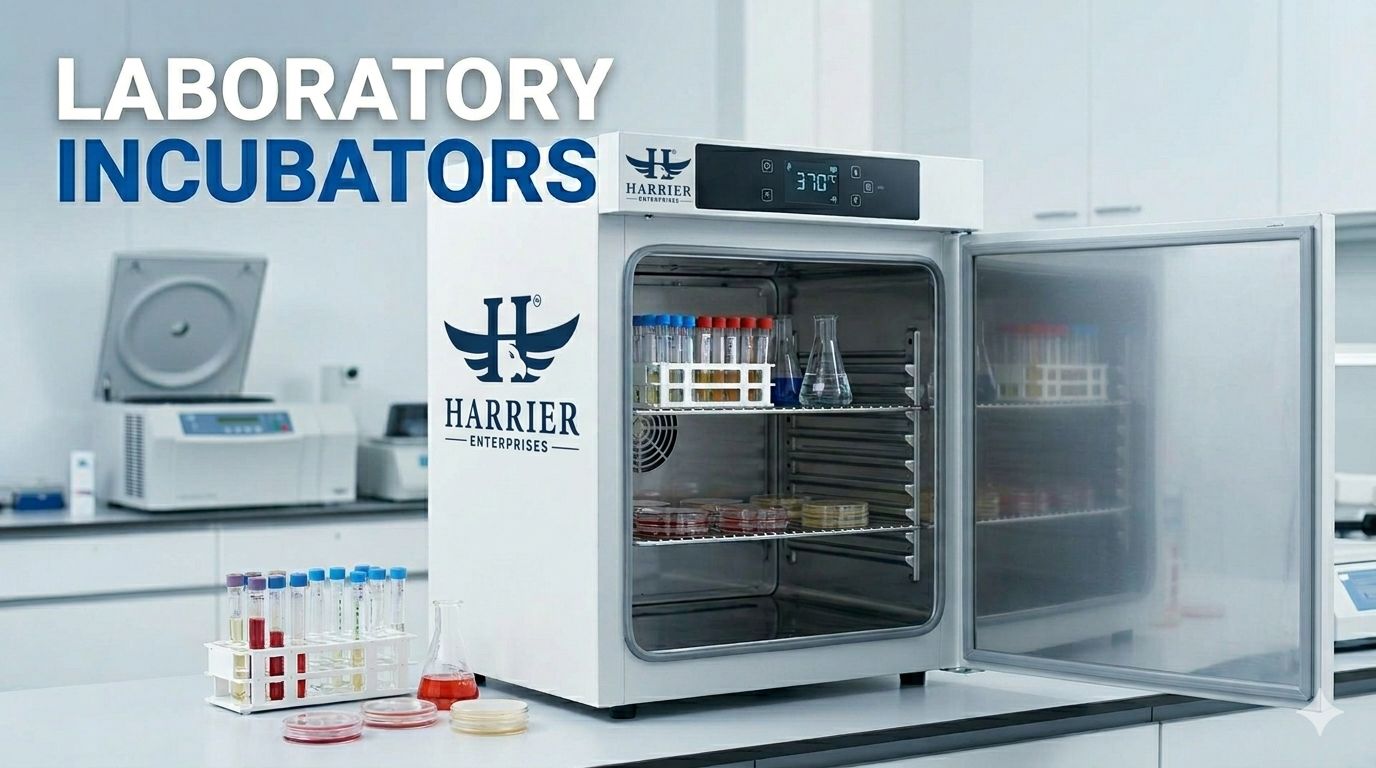
The laboratory incubator functions as a specialized instrument that maintains optimal conditions of temperature, humidity, and CO₂ levels for supporting biological sample growth and storage. The system delivers an environment that remains free from pollutants to maintain experimental conditions throughout the entire duration of the experiment.
The essential incubation instrument functions as a standard tool that researchers, hospital staff, pharmaceutical companies, and educational institutions use in their work. The system has important applications that range from bacterial culture growth to biochemical experiment execution.
Understanding the Incubator Principle
The primary incubator function requires scientists to create an artificial environment that replicates the natural environment needed for living organisms to develop. Incubators use electric heating systems together with temperature sensors and controllers that operate at advanced levels to achieve their temperature control functions.
The process operates through three main elements
- Heating elements raise the internal temperature to a preset level.
- Sensors continuously monitor and regulate the temperature.
- The air circulation systems enable the system to distribute heat throughout the area.
- The insulated chambers protect against heat loss and external disturbances.
Researchers can use advanced systems because they provide precise control over both humidity and gas composition to conduct their delicate scientific studies. The laboratory incubator provides scientists with precise control, which enables them to perform scientific experiments with reliable and effective equipment.
Incubator Uses in the Laboratory
Scientists need various incubators in laboratory settings because these instruments serve essential functions for their research. These instruments are essential for maintaining the integrity of biological and chemical reactions.
Common Applications Include:
- Cell Culture Growth – Providing optimal conditions for cell development.
- Sample Storage – Preserving specimens under stable conditions.
- Biochemical Reactions – Supporting reactions that require constant temperatures.
- Pharmaceutical Testing – Ensuring product stability and quality.
- Research Experiments – Facilitating controlled scientific studies.
Laboratories depend on high-quality incubators because they need these devices to achieve accurate and consistent research results.
Uses of Incubator in Microbiology Laboratory
One of the most significant roles of a laboratory incubator is seen in microbiology. The use of an incubator in a microbiology laboratory is crucial for studying microorganisms such as bacteria, fungi, and viruses.
Key Microbiology Applications:
- Bacterial Culture Growth – Incubators provide the ideal temperature for bacteria to multiply
- Sterility Testing – Ensuring samples are free from contamination
- Antibiotic Resistance Studies – Observing microbial reactions to treatments
- Fermentation Processes – Supporting microbial metabolic activities
Without a reliable incubation instrument, microbiological studies would lack accuracy and reproducibility. The controlled environment ensures that microorganisms grow under predictable and measurable conditions.
Types of Laboratory Incubators
To meet different laboratory needs, several types of incubators are available:
- BOD Incubators – Used for biochemical oxygen demand testing
- CO₂ Incubators – Ideal for cell culture applications requiring controlled gas environments
- Shaking Incubators – Combine incubation with agitation for uniform growth
- Dry Bath Incubators – Used for heating samples without moisture
- Refrigerated Incubators – Maintain low temperatures for specialized experiments
Each type serves specific incubator uses in laboratory processes, making it important to choose the right one based on application requirements.
Key Features of a High-Quality Incubation Instrument
When selecting a laboratory incubator, certain features ensure optimal performance:
- Accurate Temperature Control
- Uniform Heat Distribution
- Digital Display and Programmable Settings
- Durable and Corrosion-Resistant Chamber
- Energy Efficiency
- Safety Features like Overheat Protection
Companies like Muffle Furnace provide advanced incubators designed with modern technology, ensuring reliability and precision for every lab application.
Why Laboratory Incubators Are Essential
The laboratory incubator serves its main purpose because it produces results for scientific research that maintain stable performance. Scientific research requires precise temperature control because even small temperature changes can produce incorrect results. The incubators protect research work from this danger because they keep research conditions constant during the entire duration of the experiment.
Their role extends beyond research—they are also vital in healthcare diagnostics, food testing, and environmental studies. The reliability of these instruments directly impacts the quality and credibility of scientific findings.
Conclusion
The laboratory incubator functions as an advanced heating device that provides scientists with essential equipment for their research activities. Researchers can access complete incubator functionality through their knowledge of incubator principles and microbiology laboratory incubator applications. The Muffle Furnace company provides laboratories with modern scientific solutions through its advanced incubators, which deliver reliable performance and high-quality results. The correct incubator selection guarantees both precise test outcomes and sustainable laboratory productivity throughout testing operations.