

Modern laboratories and industries use precision heating devices as a necessary component for tests, investigations, and production operations. One of the most trusted thermal process equipment that is widely used today is called a muffle furnace. Thanks to its capability to produce high temperatures without any contaminants, the device is becoming an indispensable instrument in laboratories, research institutions, educational organizations, and even various fields of industry.
Here at Muffle Furnace, we know how important proper thermal processing and material testing are. The following guide provides details about this equipment.
What is a Muffle Furnace?
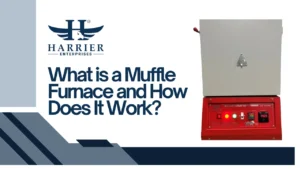
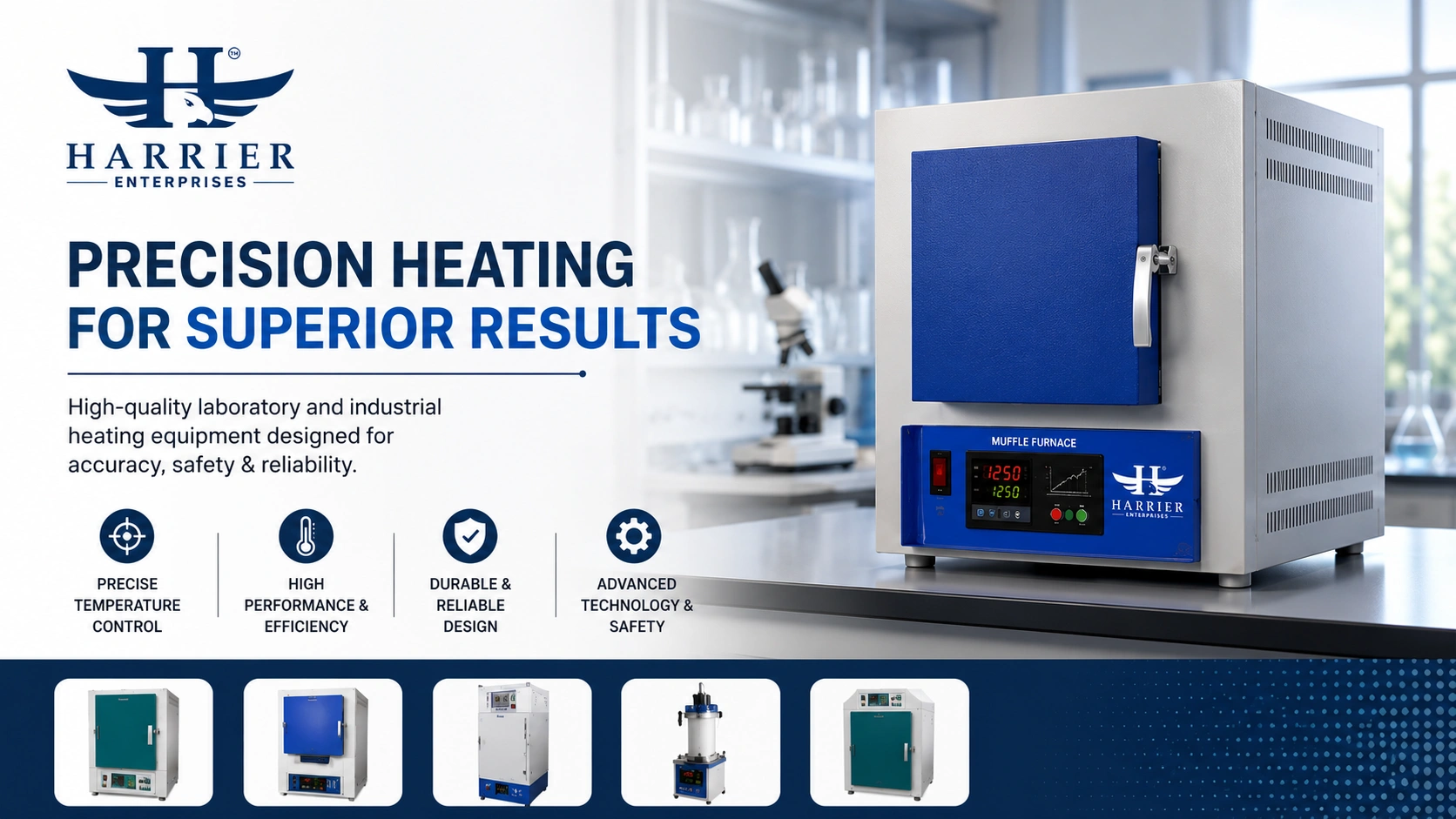
The muffle furnace is an advanced heating apparatus used to produce very high temperatures, but in an environment that prevents the samples from coming into contact with the gases of combustion or heating elements.
In contrast to other types of heating systems, samples used in a muffle furnace are subjected to indirect heating processes. It aids in preventing any possible contamination and helps scientists get reliable results. Contemporary muffle-furnaces include features such as a programmable digital controller, insulating materials, and many others that make them effective.
How Does a Muffle Furnace Work?
The mechanism of the operation of a muffle furnace is very simple but very efficient. Heating elements present in the chamber produce heat when electricity passes through them. Heat can be evenly distributed throughout the chamber by means of effective insulators.
The sample is introduced into the ceramic-lined chamber, where it is heated at regulated temperatures. As there is no involvement of fire in the heating process, it ensures clean and consistent results.
Digital temperature controllers are used to monitor the temperature inside the chamber, which enables controlled heating. Due to their effectiveness in providing controlled heating environments, muffle-furnaces are widely used in scientific tests and research.
Why is a Muffle Furnace Important?
Processes involving high temperatures necessitate a high degree of precision and accuracy. A muffle furnace allows for this through its ability to create an environment where there are no outside influences acting upon the sample.
Scientists and industry experts alike utilize the furnaces for activities that cannot tolerate even small variances in temperature. This allows for more accurate testing and increased productivity.
From performing ash content testing to metal processing, the muffle-furnace delivers consistent results.
Muffle Furnace Use in Modern Industries
The demand for muffle furnace use continues to grow across multiple sectors due to its versatility and precision. Industries use these furnaces for heating, testing, calcination, sintering, and thermal processing applications.
Some common industries that utilize muffle-furnaces include:
- Metallurgical Industries
- Pharmaceutical Companies
- Chemical Processing Plants
- Ceramic Manufacturing Units
- Educational Institutions
- Research Laboratories
- Aerospace Industries
- Electronics Manufacturing Facilities
The ability to maintain stable temperatures makes muffle-furnaces suitable for both small-scale laboratory work and large-scale industrial processes.
Muffle Furnace Uses in Laboratory Applications
One of the most common muffle furnace uses is in laboratory environments where precise thermal conditions are required. Scientists and researchers depend on these furnaces for conducting experiments and analyzing materials under controlled heating conditions.
A muffle furnace used in laboratory settings helps perform several critical functions, including:
- Ash content determination
- Sample preparation
- Gravimetric analysis
- Material testing
- Thermal decomposition studies
- Quality control testing
- Ceramic sample firing
- Glass analysis
The controlled atmosphere inside the furnace allows researchers to obtain highly accurate and repeatable results, making it an indispensable laboratory instrument.
Uses of Muffle Furnace in Laboratory Research
The uses of muffle furnace in laboratory research extend beyond routine testing procedures. Modern laboratories utilize these furnaces for advanced scientific investigations and material development projects.
Researchers frequently use muffle-furnaces to:
Heat Treatment Studies
Materials are subjected to specific temperature profiles to evaluate their structural and mechanical properties.
Ash Analysis
Organic substances are heated at high temperatures to determine ash content and residue percentages.
Material Characterization
Scientists study the behavior of materials under controlled thermal conditions to understand their physical and chemical properties.
Catalyst Development
Many research projects involving catalysts require high-temperature treatment processes that can be effectively performed using muffle-furnaces.
Ceramic Processing
Laboratories involved in ceramic research use these furnaces for firing, sintering, and testing new ceramic formulations.
Applications of Muffle Furnace
The versatility of muffle-furnaces makes them valuable across numerous industries and research fields.
Metallurgical Industry
Used for annealing, hardening, tempering, and testing metal samples.
Pharmaceutical Industry
Supports quality control, sample preparation, and thermal stability testing.
Chemical Industry
Used for calcination, decomposition studies, and thermal treatment of chemical compounds.
Educational Institutions
Provides students with practical experience in material science and laboratory experiments.
Ceramic Industry
Used for firing and sintering ceramic materials at controlled temperatures.
Electronics Sector
Supports component testing and thermal processing applications.
Key Benefits of Using a Muffle Furnace
Organizations choose muffle-furnaces because of their numerous advantages:
- Accurate temperature control
- Uniform heat distribution
- Contamination-free heating environment
- High operational reliability
- Energy-efficient design
- Improved testing accuracy
- Long service life
- User-friendly operation
- Low maintenance requirements
- Consistent and repeatable results
These benefits make muffle-furnaces a valuable investment for laboratories and industries alike.
Factors to Consider When Selecting a Muffle Furnace
Choosing the right furnace depends on several factors:
Temperature Requirement
Select a model that meets your maximum operating temperature needs.
Chamber Size
Choose a chamber capacity suitable for your sample volume and processing requirements.
Heating Elements
High-quality heating elements ensure efficient and consistent performance.
Temperature Controller
Programmable digital controllers improve accuracy and process automation.
Insulation Quality
Good insulation minimizes heat loss and reduces energy consumption.
Safety Features
Look for over-temperature protection and reliable construction for safe operation.
Conclusion
The muffle furnace is one of the most crucial thermal processing machines used in laboratories and factories in the current world. Be it material testing and ashing or heat treatments, this machine is very versatile and has a wide range of applications, which continue to increase day by day. The increasing demands for muffle-furnace applications, testing, and temperature control only reflect its importance in today’s laboratories and factories.
Muffle Furnace aims at giving you all the reliable information about muffle-furnaces and their applications and solutions to meet your needs. No matter if you are searching for information on muffle furnace applications, how a muffle furnace used in laboratory, or the uses of muffle furnace in laboratory, it is definitely worth investing in the correct muffle furnace.