

In the fast-changing arena of science and industries, accuracy and reliability have become a necessary ingredient for the development of new materials. Whether you are dealing with nanotechnology, the pharmaceutical industry, chemical engineering, or advanced ceramics, high-end technology is used by scientists for an accurate synthesis process. The Hydrothermal Reactor can be regarded as one of the best instruments used to create chemical reactions within a high-pressure and temperature environment.
It is worth mentioning that the advanced Hydrothermal Autoclave Reactor system is often used by modern researchers as an effective tool for providing a reliable and safe synthesis process. They help to create highly pure materials, nanoparticles, crystals, and other advanced materials necessary for industries.
What is a Hydrothermal Autoclave Reactor?
A hydrothermal autoclave reactor refers to a specialized pressure vessel developed for carrying out hydrothermal reactions. Such reactions are conducted in enclosed environments under high temperature and pressure conditions. This technique is commonly applied for the production of materials that cannot be synthesized using traditional methods.
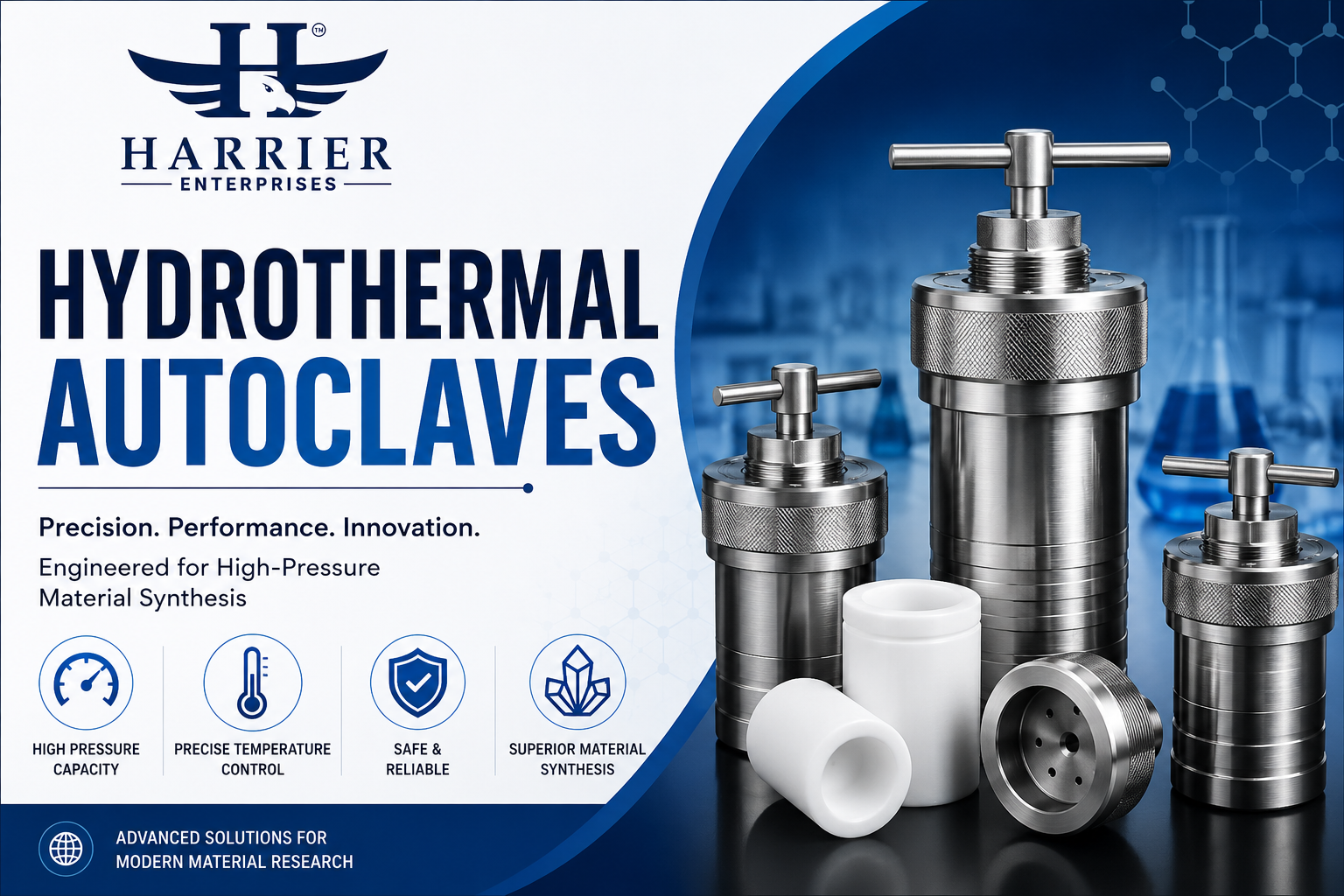
The reactor is usually made up of a robust outer body of stainless steel material, together with an inner chamber that is resistant to corrosion. Modern autoclaves are mostly composed of a Teflon-lined autoclave.
Hydrothermal synthesis technology is highly effective for preparing:
- Nanomaterials
- Crystalline compounds
- Metal oxides
- Zeolites
- Battery materials
- Ceramic powders
- Advanced catalysts
Because of its exceptional precision, the Autoclave Reactor has become an indispensable instrument in laboratories and industrial research facilities.
Importance of Hydrothermal Synthesis in Modern Research
The hydrothermal method is a process in which chemicals undergo reaction in an aqueous solution under pressure. The process provides an opportunity for greater control over factors such as particle size, crystallinity, and purity compared to conventional heating.
A Hydrothermal Synthesis Autoclave Reactor provides several advantages, including:
- Improved Material Purity: The sealed environment minimizes contamination, helping researchers produce high-quality materials with superior consistency.
- Better Temperature and Pressure Control: Accurate pressure and temperature regulation ensure reproducible results and enhanced reaction efficiency.
- Enhanced Crystal Growth: Hydrothermal methods are ideal for growing large and pure crystals used in electronics, optics, and semiconductor industries.
- Energy-Efficient Processing: Compared to some traditional synthesis techniques, hydrothermal systems often require lower processing temperatures and shorter reaction times.
These benefits make the Hydrothermal Reactor a preferred solution for advanced material research.
Features of Advanced Hydrothermal Autoclaves
Modern hydrothermal systems are engineered with advanced safety and performance features that improve laboratory productivity and operational reliability.
High-Strength Stainless Steel Construction
The external body of the Autoclave Reactor is manufactured using durable stainless steel capable of withstanding extreme pressures and temperatures.
Teflon Lined Interior
A Teflon lined autoclave offers superior chemical resistance and prevents unwanted reactions between chemicals and the reactor wall. This lining improves sample purity and extends equipment lifespan.
Leak-Proof Sealing System
Advanced sealing mechanisms help maintain stable pressure conditions during synthesis operations.
Multiple Capacity Options
Hydrothermal reactors are available in various capacities suitable for laboratory-scale testing as well as industrial research applications.
Excellent Thermal Stability
Uniform heat distribution improves reaction consistency and enhances overall synthesis accuracy.
Why Teflon Lined Autoclaves are Preferred
The Teflon Lined Autoclave is very much preferred owing to its extraordinary resistance to corrosion caused by chemicals and heat. The Teflon-lined interior helps avoid contamination throughout the reaction process, leading to precise results.
Key advantages include:
- High chemical resistance
- Improved product purity
- Easy cleaning and maintenance
- Longer equipment lifespan
- Enhanced operational safety
These benefits make Teflon-lined systems ideal for research laboratories and industrial material synthesis applications.
Applications of Hydrothermal Autoclave Reactors
The versatility of a Hydrothermal Autoclave Reactor allows it to be used across multiple scientific and industrial sectors.
- Nanotechnology Research: Researchers use hydrothermal systems to synthesize nanoparticles with controlled size and morphology for electronics, sensors, and coatings.
- Pharmaceutical Industry: Hydrothermal synthesis techniques help create specialized compounds and improve drug formulation research.
- Advanced Ceramic Production: The Hydrothermal Synthesis Autoclave Reactor is widely used to develop ceramic powders and high-performance industrial materials.
- Energy Storage Materials: Battery manufacturers use hydrothermal methods for producing advanced electrode materials and energy storage compounds.
- Chemical Processing: Chemical laboratories rely on
- systems for catalyst preparation and specialized reaction studies.
Factors Affecting Hydrothermal Autoclave Reactor Price
The Hydrothermal Autoclave Reactor Price depends on several important factors, including:
| Feature | Impact on Price |
|---|---|
| Reactor Capacity | Larger reactors generally cost more |
| Material Quality | Premium stainless steel increases durability |
| Teflon Lining Quality | Higher-grade lining improves performance |
| Pressure Rating | High-pressure systems require stronger construction |
| Temperature Range | Advanced heating systems affect pricing |
| Safety Features | Additional protection systems increase value |
While price is important, laboratories should prioritize quality, durability, and safety when selecting a reactor system.
Choosing the Right Hydrothermal Reactor
Choosing the best possible Hydrothermal Reactor requires taking into account some critical factors, including:
- Operational temperature required
- Pressure rating
- Capacity for sample size
- Resistance to chemicals
- Evenness of heating
- Certifications for safety
A top-notch Hydrothermal Autoclave Reactor will not only ensure accurate results in synthesis but also boost the efficiency and longevity of the device.
Muffle Furnace: Trusted Source for Advanced Laboratory Equipment
The hydrothermal systems required by laboratories and research institutes can be found in the Muffle Furnace, which is well-known for manufacturing quality hydrothermal reactors. The company is famous for providing highly effective Hydrothermal Synthesis Autoclave Reactor systems that are ideal for scientific, materials development, and industrial purposes.
The reactors manufactured by the company are durable and robust; they feature sturdy stainless steel construction with high-grade Teflon Lined Autoclaves.
Conclusion
Modern hydrothermal reactors have revolutionized material synthesis technology through the ability to precisely control temperature, pressure, and reaction conditions. The Hydrothermal Autoclave Reactor allows scientists to obtain better quality materials, improve crystallization processes, and provide excellent reproducibility.
No matter how they are used – in nanotechnology, medicine, ceramics, or chemical manufacturing – the Autoclave Reactor always plays an important role for laboratory researchers today. Their reliability, efficiency, and advanced safety make these devices indispensable for scientific and industrial studies.
To meet the requirements of contemporary science and industry, Muffle Furnace offers its customers high-quality hydrothermal reactors for material synthesis.