

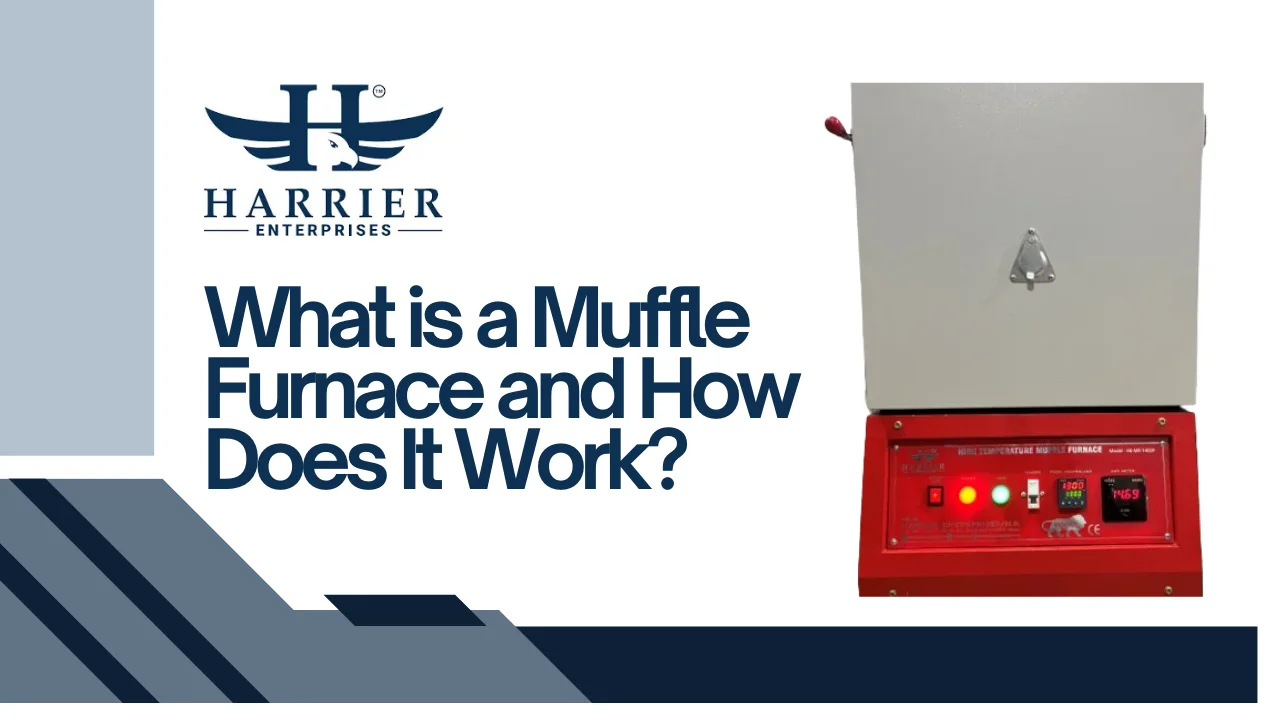
A muffle furnace is a high-temperature laboratory heating device designed to heat materials in a controlled and contamination-free environment. It is widely used in laboratories, research institutes, and industrial facilities for applications such as ashing, heat treatment, material testing, sintering, and thermal analysis.
Unlike conventional furnaces, where materials may be exposed to flames or combustion gases, a Muffle Furnace heats samples indirectly. The heating elements are separated from the sample chamber by insulated walls, which ensure uniform heating and prevent contamination.
Because of their precise temperature control and ability to reach extremely high temperatures, muffle furnaces are essential equipment in industries such as metallurgy, ceramics, pharmaceuticals, environmental testing, and research laboratories.
In this guide, we will explain what a muffle furnace is, how it works, its applications, components, types, and its importance in laboratories and industries.
What is a Muffle Furnace?
A muffle furnace is a type of electric furnace designed to heat materials at high temperatures without exposing them directly to flames or combustion gases.
The furnace contains a sealed heating chamber where the material is placed inside ceramic crucibles or containers. Heat is generated by electrical heating elements embedded in the furnace walls, and the heat is distributed evenly throughout the chamber.
This indirect heating method ensures:
- Accurate temperature control
- Uniform heat distribution
- Contamination-free heating
- Safe and controlled thermal processing
Muffle furnaces can operate at temperatures ranging from 800°C to 1800°C, depending on the model and heating elements used.
Because of their high precision, they are widely used for laboratory testing, material research, and industrial heat treatment processes.
What is a Muffle Furnace Used For?
Muffle furnaces are used for many scientific and industrial processes that require high and stable temperatures.
Some of the most common applications include:
1. Ash Content Testing
In analytical laboratories, muffle furnaces are used to determine the ash content of food products, coal, polymers, and organic materials. The furnace burns off organic matter and leaves only inorganic residues.
2. Heat Treatment of Metals
Industries use muffle furnaces for annealing, tempering, hardening, and stress relieving metal components.
3. Temperature Controller Regulates Heat
A digital PID temperature controller monitors and adjusts the heating process. It ensures the furnace reaches and maintains the set temperature accurately.
4. Material Testing
Researchers use a muffle to test the thermal stability, composition, and durability of materials under high temperatures.
5. Ceramic Processing
The ceramic industry uses a muffle for sintering, firing, and vitrification of ceramic products.
6. Pharmaceutical Testing
Pharmaceutical laboratories use a muffle to perform drug stability testing and residue analysis.
7. Biological Sample Incineration
Muffle helps in sterilizing and decomposing biological samples safely.
Muffle Furnace Working Principle
The working principle of a furnace is based on electric resistance heating and radiant heat transfer.
The heating elements inside the furnace generate heat when an electrical current passes through them. These elements are embedded within insulated furnace walls and do not come into direct contact with the sample.
The heat produced is transferred into the chamber through radiation and convection, ensuring uniform heating of the materials placed inside.
A thermocouple sensor monitors the internal temperature and sends feedback to the temperature controller, which maintains the desired heating conditions.
The insulation inside the furnace prevents heat loss and ensures energy efficiency and stable temperature distribution.
This controlled heating environment makes the muffle ideal for precision laboratory applications.
Main Components of a Muffle Furnace
A typical muffle consists of several important components that work together to ensure safe and efficient operation.
- Heating Chamber: The heating chamber is the internal space where the material is placed for heating. It is designed to withstand extremely high temperatures.
- Heating Elements: Heating elements are responsible for generating heat inside the furnace. Common materials include:
- Nichrome
- Kanthal
- Silicon carbide
- Molybdenum disilicide
- Temperature Controller: A digital or programmable controller allows users to set and maintain precise temperatures.
- Thermocouple: The thermocouple measures the internal temperature and ensures accurate temperature monitoring.
- Insulation Layer: High-quality ceramic fiber or refractory insulation helps retain heat and improve energy efficiency.
- Outer Body: The outer body is usually made from stainless steel or powder-coated mild steel, ensuring durability and safety.
Uses of Muffle Furnace in Laboratory
Laboratories rely heavily on a muffle for high-precision heating and testing applications.
Common laboratory uses include:
- Ash content determination
- Thermal decomposition studies
- Metallurgical sample analysis
- Polymer stability testing
- Chemical residue testing
- Material research and development
Because of their accuracy and contamination-free heating environment, laboratory muffle ovens are essential equipment in research laboratories and quality control labs.
Temperature Range of Muffle Furnaces
Muffle furnaces are available in different temperature ranges based on industrial requirements:
| Temperature Range | Typical Application |
|---|---|
| 800°C | Ash testing |
| 1000°C | Material testing |
| 1200°C | Laboratory research |
| 1400°C | Metallurgical applications |
| 1600°C | Advanced research |
| 1700°C – 1800°C | High-temperature ceramic & material sintering |
Higher temperature models use advanced heating elements like silicon carbide or MoSi2 rods.
Types of Muffle Furnace
Different types of laboratory muffle are designed to meet specific industrial and laboratory requirements.
1. Box Type Muffle Furnace
This is the most commonly used furnace for general laboratory heating and testing applications.
2. Tube Furnace
Tube furnaces allow heating inside a cylindrical tube and are often used for controlled atmosphere experiments.
3. Vacuum Furnace
These furnaces operate in a vacuum environment to prevent oxidation during heat treatment processes.
4. High Temperature Laboratory Muffle Furnace
These furnaces can reach temperatures above 1500°C and are used for advanced material research and ceramic processing.
Muffle Furnace vs Hot Air Oven
Many laboratories confuse these two devices. Here’s a simple comparison:
| Feature | Muffle Furnace | Hot Air Oven |
|---|---|---|
| Temperature Range | Up to 1800°C | Up to 250°C |
| Heating Purpose | High-temperature processing | Sterilization & drying |
| Application | Material testing | Glassware sterilization |
| Heating Method | Electric resistance | Hot air circulation |
How to Choose the Right Muffle Furnace
When selecting a muffle furnace, consider:
1. Required Temperature Range
Choose based on your application (1200°C, 1400°C, 1600°C, etc.)
2. Chamber Capacity
Select appropriate volume (3L, 6L, 9L, 12L, etc.)
3. Heating Element Type
- Kanthal (up to 1200°C)
- Silicon carbide (1400–1600°C)
- MoSi2 (1700–1800°C)
4. Programmable Controller
For research labs, programmable temperature control is recommended.
5. Safety Features
Ensure over-temperature protection and proper insulation.
Frequently Asked Questions (FAQs)
What is the maximum temperature of a muffle furnace?
High-temperature models can reach up to 1800°C.
Why is it called a muffle furnace?
The heating chamber isolates the material from combustion gases and flames.
Can a muffle furnace run continuously?
Yes, industrial models are designed for continuous operation with proper ventilation.
What industries use muffle furnaces?
What industries use muffle furnaces?
Pharmaceutical, research labs, metallurgical industries, ceramics, and material science labs.
Conclusion
A laboratory muffle furnace is an advanced heating device used for high-temperature laboratory and industrial applications. Its unique design allows materials to be heated in a controlled and contamination-free environment, making it ideal for testing, research, and manufacturing processes.
From material analysis and ash testing to ceramic sintering and metal heat treatment, muffle ovens play a crucial role in many industries.
Choosing the right furnace depends on factors such as temperature range, chamber size, heating elements, and application requirements. With the right equipment, laboratories and industries can achieve accurate, reliable, and efficient thermal processing results.